

It is difficult to think of the photographic negative as the final form of photography. And yet, it is precisely its shadow—the positive print—that we see and ultimately strive for. Most of the visual characteristics of the final image are already embedded there, in the densities of the negative and in the way it has been developed. And despite this, the negative often remains in the shadows—especially for photographers who are just beginning to work analogue and perceive the film development merely as a technical step between exposure and “seeing the photograph.”
In this article, I attempt to shed light precisely on this moment in the process of film development, adhering strictly to a scientific approach to photography, following a physicochemical logic verified through controlled darkroom tests.
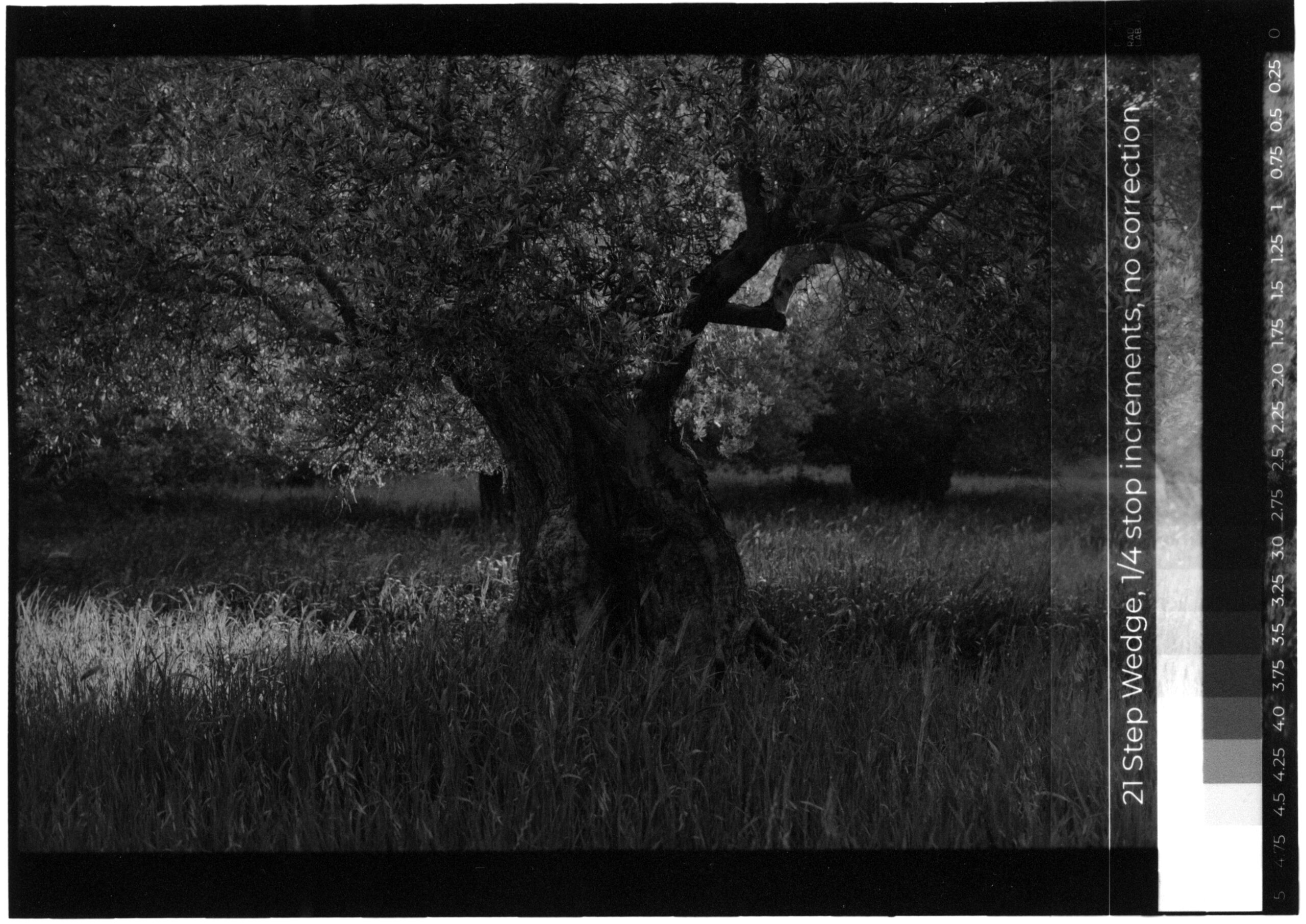
Assuming careful craftsmanship, the principles remain the same: light affects the film, development shapes what has been exposed and a single negative may yield countless positive forms. Understanding this is a responsibility we choose to take on.
How Development Shapes the Image Before We Ever See It
The first moment we open the developing tank and see the negative—still wrapped in foam—is already a moment of delay. What we perceive is a post factum image—one that has been formed prior to the act of seeing itself. The process is finished, and our vision arrives too late to witness it. From this point on, the image remains open to further interpretations, transformations, or refinements in the positive print, but in this article I focus specifically on its intermediate state and its latent potentials.
In photographic theory, much has been written about the ghostly nature of the image. Roland Barthes describes photography as ça-a-été—“that-has-been,” a trace of a moment already past, marked by the absence and death of the referent. This reading is useful as a conceptual framework, but it does not explain what happens to the image between exposure and film development. In the present text, ghostliness is understood differently. It is not a property of the developed image, but of the latent state after exposure. Here the ghost is not what has been, but what has occurred and remains amorphous—physically present, yet deprived of visible form.
As is well known, seeing requires light—vision perceives the light reflected by objects. If we dare to look inside the camera to see what the latent image looks like, the moment we open it, the image will change. If we open it in complete darkness, we will see nothing. The latent image is either destroyed by light or remains invisible—but it never appears as such.
This is where the key question of this text emerges: how does development make the image visible to us, and what role does it play in shaping it? Film development is not merely a technical step that allows us to “see” an already existing image. It is a necessary intervention without which the image remains unobservable, and at the same time a process through which we assume responsibility for the characteristics the image will acquire. In this sense, the question is not simply how we “compile” the image, but how the image itself changes in the course of its formation.
Methodology of Visual Analysis
Every combination of film and developer produces a different negative. Sometimes the difference is more pronounced, sometimes subtler, but a difference always exists. For us as photographers, this stage is a crucial part of image creation, as it can become an essential component of our visual style and signature. In the following sections, I focus on the main characteristics of the negative image that, in practice, change perceptibly depending on the developer and the development method: sharpness, grain, contrast and tonal separation, and effective film speed.
It is important to clarify from the outset that these characteristics are largely embedded in specific film brands and models and are usually analyzed and compared on this basis in reviews. The film development process, however, can significantly affect them—enhancing, suppressing, or redistributing existing qualities and thus determining the final visual result.
This text is limited to black-and-white negatives. Color films would allow for a similar investigation, but at present I lack an adequate mechanism for analysis and comparison. Black and white photography, in any case, offers greater freedom to experiment with different developers, dilutions, and development approaches. For this reason, all visual examples in this article are presented exclusively as traditional silver-gelatine prints. Although widely preferred, film scanners introduce a number of variables into the process that can easily undermine the basis for comparison.
Darkroom practice shows that the characteristic traits of a negative begin to manifest themselves particularly clearly at a minimum of 10× enlargement. This is the point at which films begin to “give out,” and the differences between film development regimes become evident. This means that to adequately analyze a 35mm negative, it must be enlarged to approximately 30×40 cm, while a medium format 6×6 cm negative should be enlarged to at least around 60×60 cm, and so on. For all silver-gelatine prints used as example images in this text, I use Fomaspeed Variant 312 pricessed in Adox Adotol Konstant II at 20°C for 2 minutes. The enlarger I work with is diffusion-based, equiped with Durst Neonon f=80mm/1:5.6 and Rodenstock Rodagon f=135mm/1:5.6. Lens settings are chosen with maximum sharpness in mind, avoiding diffraction-related defects.

Kodak TMax 100 @ R09 (1+50) | Carl Zeiss Planar T* f=80mm/1:2.8 @ f8. The intention was a razor-clear rendering, which dictated the use of a low-speed film combined with a high-definition developer.

13x18cm silver-gelatine print from 6x6cm negative with linear magnifiction x12.5. This image represents the maximum level of local contrast and sharpness I have ever achieved in my practice.
Sharpness
Sharpness in photography is the subjective impression of how clearly details are rendered in an image. It encompasses two interrelated factors: micro-contrast and resolving power. Sharpness can be referred to as “technical sharpness.” It describes how well details are focused, but it is difficult to define or measure objectively—different authors associate it with distinctness of outlines, edge clarity, or abrupt tonal transitions.
Acutance represents an objective way of measuring sharpness: it describes the local contrast at tonal edges that forms the visual sensation of crispness, also known as the adjacency effect. Developers that enhance this effect are referred to as sharp, high-acutance, or high-definition developers. When we create higher local contrast, we effectively “sharpen” the perceived edges of the film grain, which enhances the visual impression of sharpness. In addition, such developers contain low or zero levels of solvent agents that would otherwise dissolve and round off the edges of silver grains in the film emulsion. Thus, even when technical focus remains unchanged, our visual perception of sharpness can be enhanced or softened through film development, shaping the final impression of image sharpness.
If high sharpness were the sole criterion for image quality, all developers would be “sharp.” Clearly, this is not the case. The reason is that increasing sharpness—particularly acutance—inevitably amplifies other visual effects, most notably grain, as silver particles in the emulsion become more clearly defined. At the same time, micro-gradation in the midtones often suffers: abrupt tonal transitions are emphasized at the expense of smoothness. Achieving pronounced acutance depends on many factors—the film stock, the developer, the development technique, and even the subject matter itself. Last but not least, the camera optics play a role: if we shoot with a Diana F, even the sharpest developer will produce a “soft” image.
Grain
The analog photographic image is formed by countless particles of metallic silver reduced during film development. What we perceive as grain is almost always clusters of these particles rather than individual silver crystals. The subjective perception of the shape, size, and definition of film grain (more precisely, its clusters) is referred to as graininess. Fundamentally, graininess is predetermined during film manufacture—higher-speed films are generally grainier than slower ones. Objectively, grain can be studied through microscopic measurement, but it becomes a particularly noticeable visual characteristic in large photographic prints.
The film development process does not create grain, but it strongly influences how grain is rendered, depending on the chemical composition of the developer and the duration of its interaction with the emulsion. Different developers render grain differently: sharpened and well-defined, chaotic and aggressive, softened and rounded, or somewhere in between. This is where graininess becomes directly intertwined with sharpness and local contrast.
Film grain can make a photograph highly expressive and reinforce its visual message—or completely undermine it. The presence or absence of pronounced grain is not a question of quality in itself, but primarily an authorial choice, provided we understand how and why that choice is made.
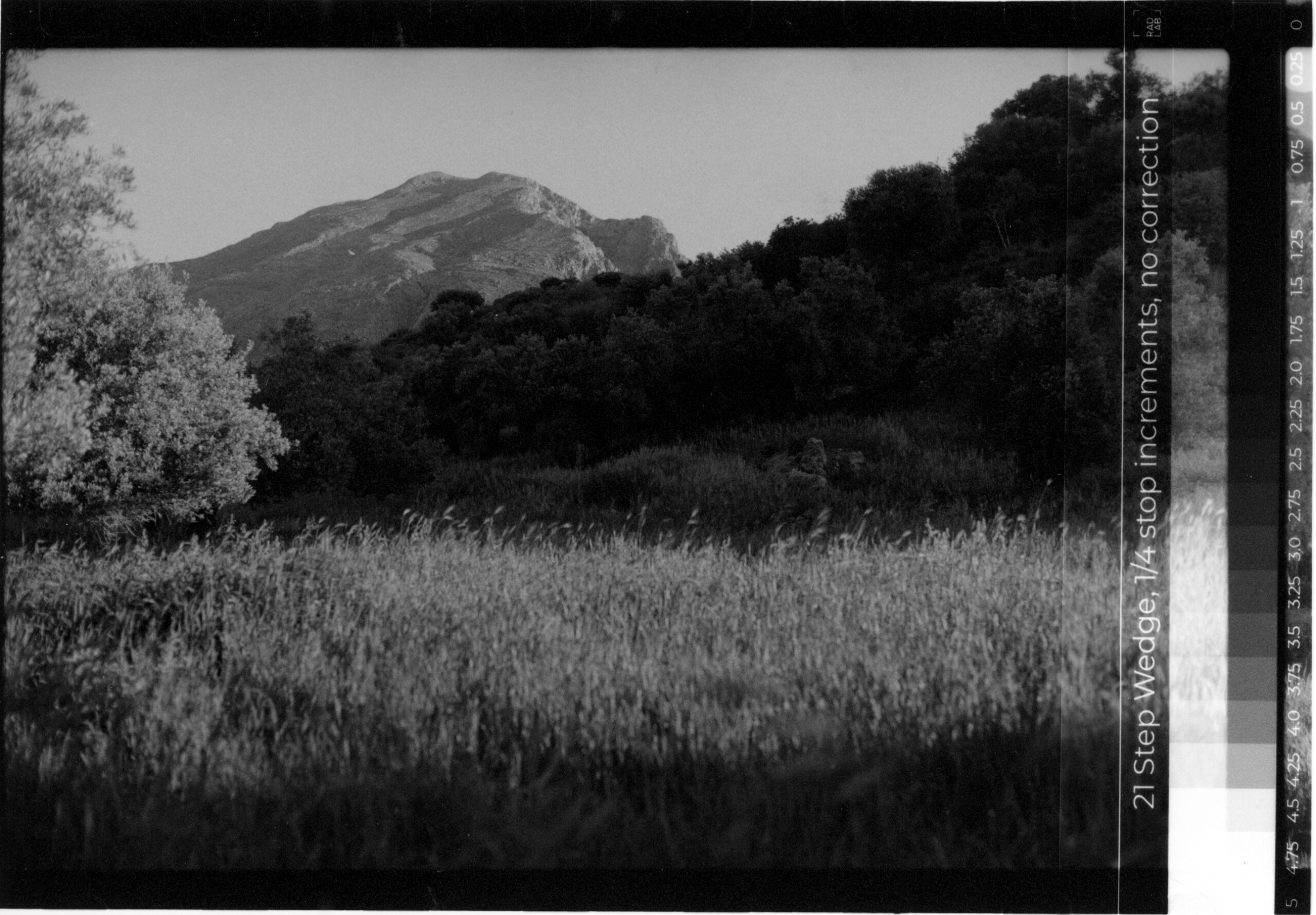
Agfaphoto APX 400 @ R09 (1+50) | Nikkor f=50mm/1:1.4 @ f2 Despite the use of a high-acutance developer, the image lacks true sharpness due to aperture used.
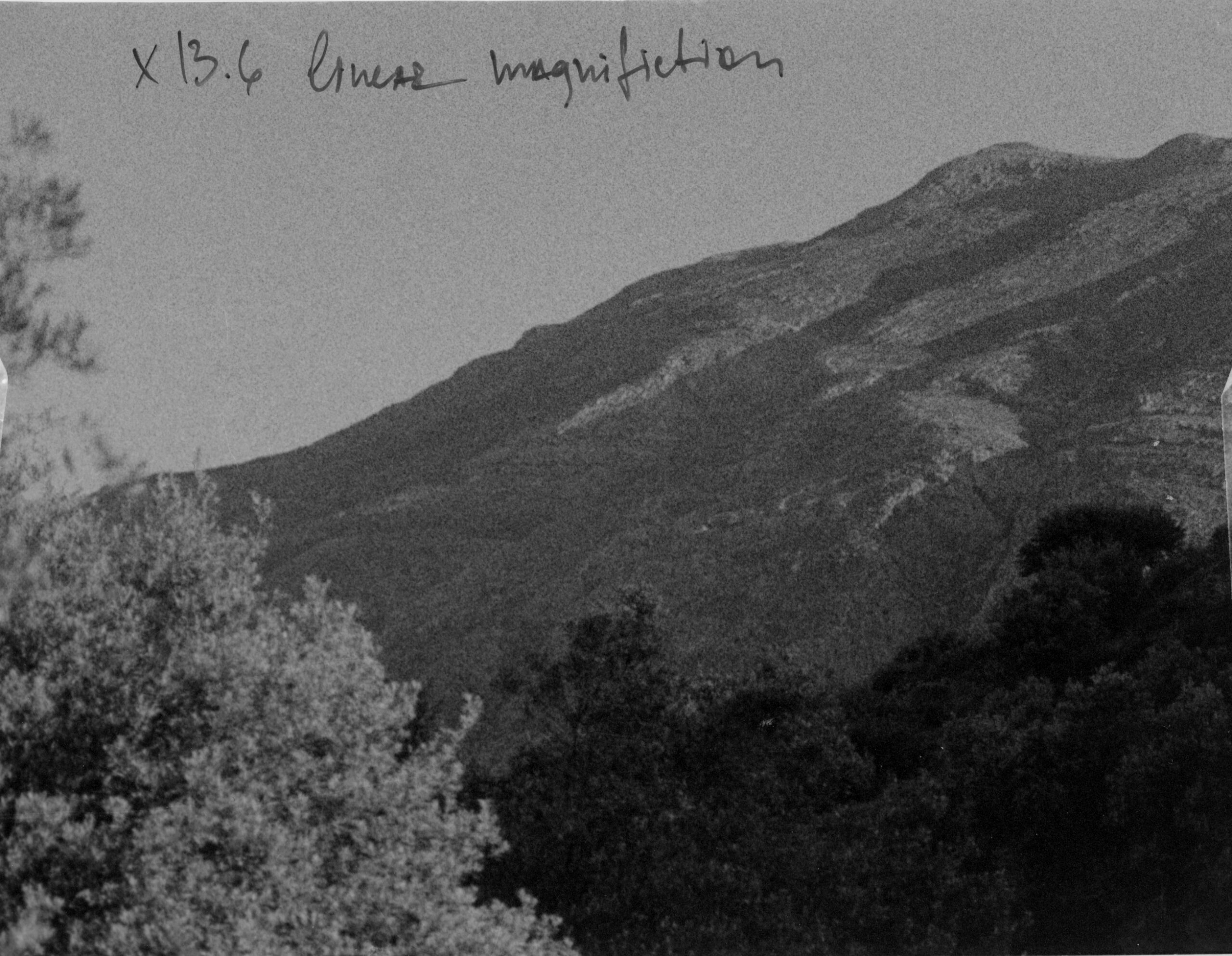
The typical fuzzy grain of R09 is clearly visible, amplifying the classic, thick emulsion structure of APX 400 | 13x18cm crop from 50x35cm enlargment
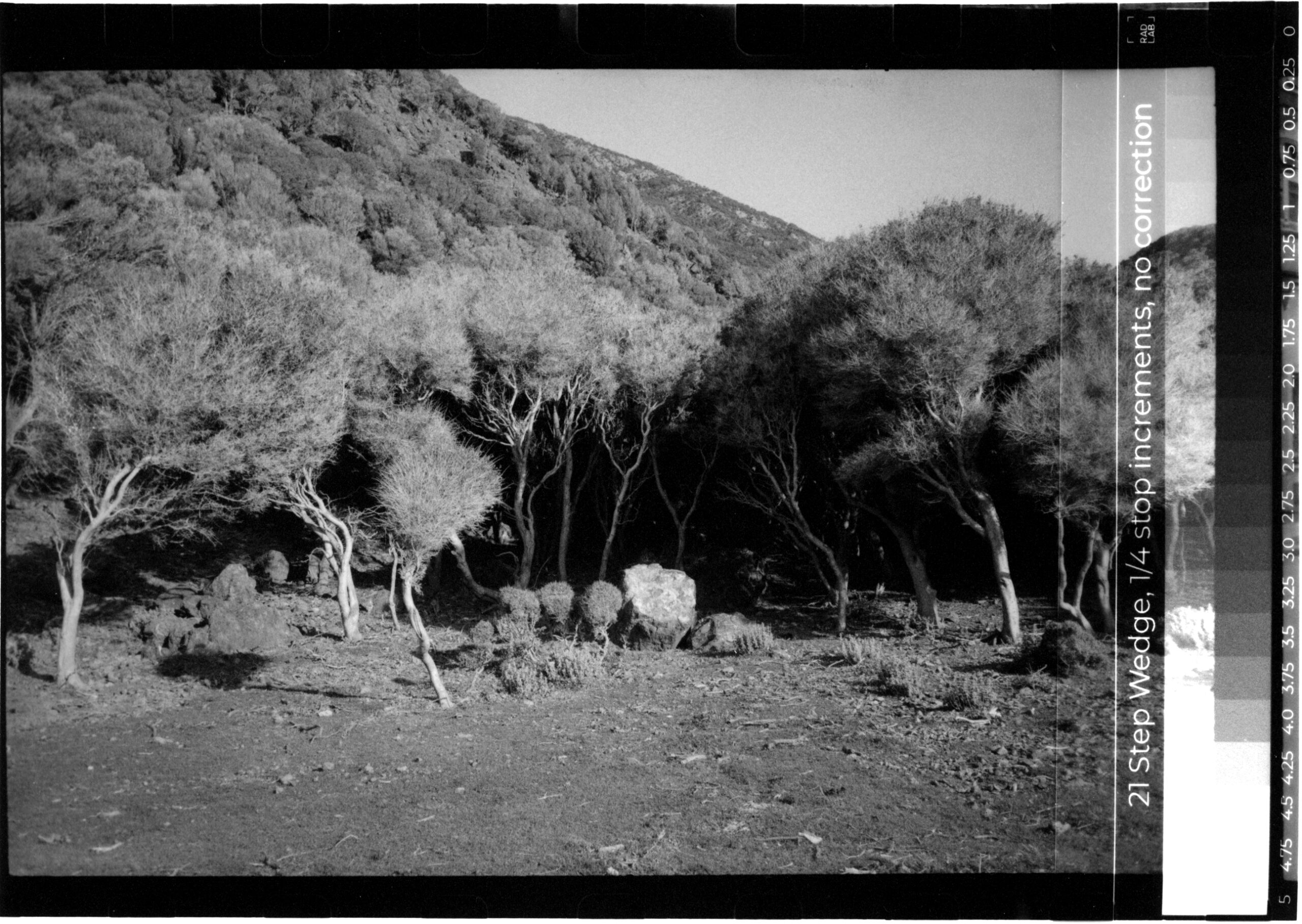
AgfaPhoto APX 400 @ D-76 (1+3) | Olympus Mju I f=35mm/1:3.5
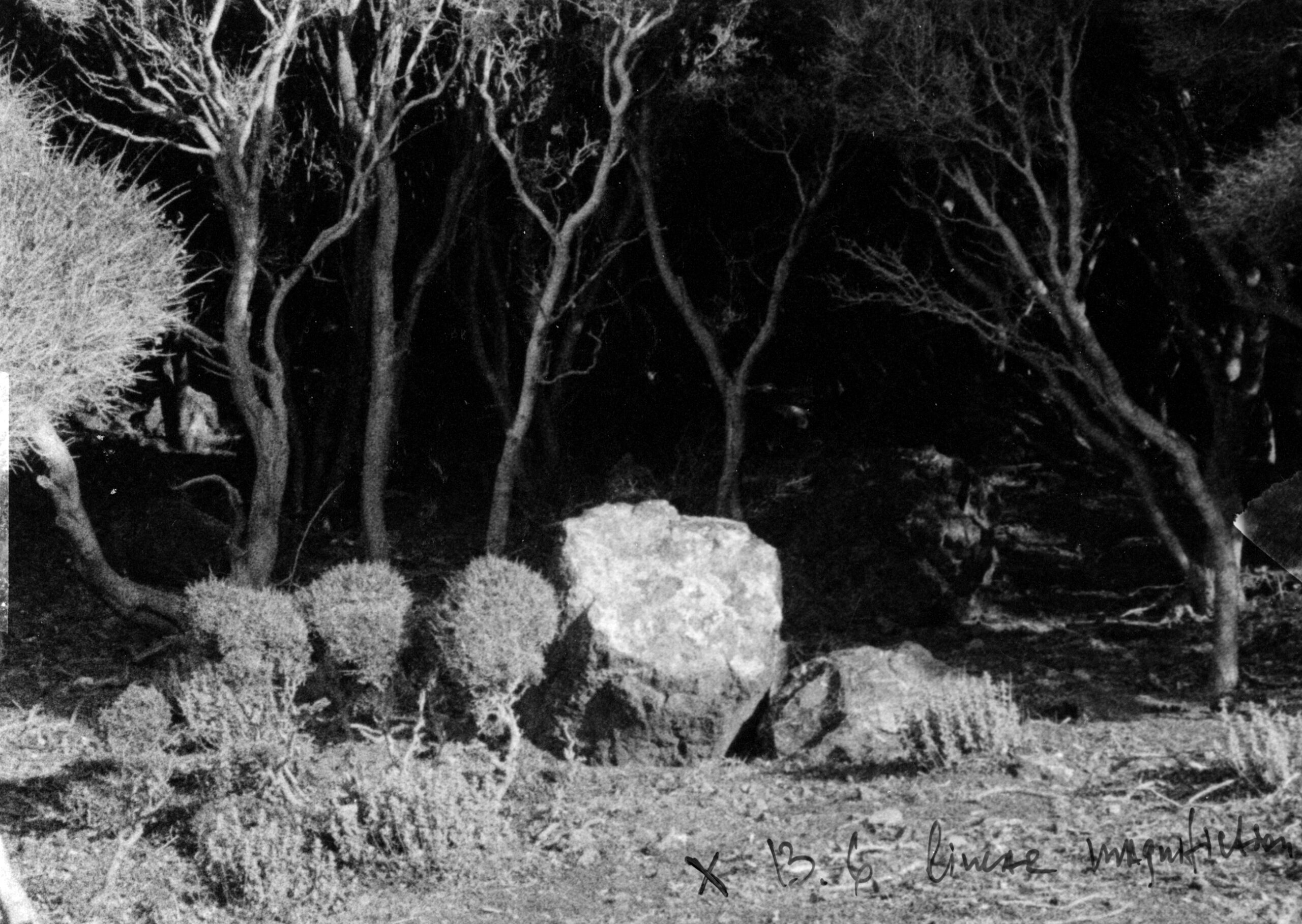
APX 400 can deliver convincing sharpness, moderate grain, and well-controlled highlights with proper development – something that D-76 has been designed for. | 13x18cm crop from 50x35cm enlargment
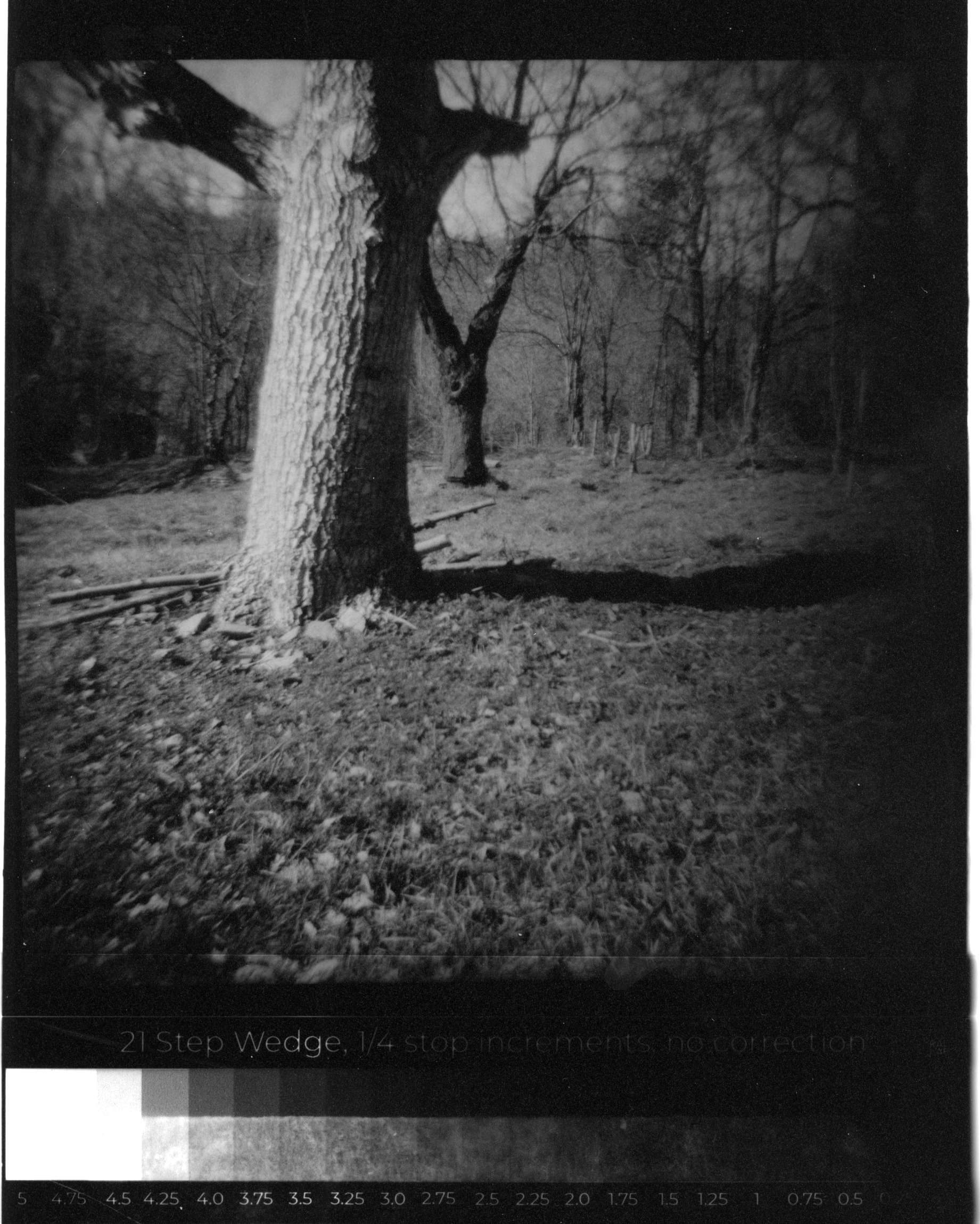
Diana F f=80cm/1:unknown | NP22 @ R09 (1+50) Even when paired with a high-acutance developer, limited optical resolution results in visibly reduced sharpness with soft and dreamy eastetics.
Contrast and Tonal Distribution
What We Mean by Contrast and Tonal Distribution at a Visual Level
The difference between the lightest (transparent) and darkest (dense) areas of the negative defines its contrast. The manner in which densities transition smoothly or abruptly from light to dark is referred to as tonal distribution. This is where all the nuances and clarifications surrounding contrast begin—a topic that could easily fill six separate articles. The reason is simple: tonal distribution is perhaps the most powerful visual tool available to photography.
Contrast as a Measurable Quantity
The tonal behavior of every photosensitive emulsion is largely predetermined, but during film development we can significantly influence it by developing the film to a specific contrast. The very etymology of the term suggests that this is an objectively measurable quantity. The branch of photography that studies this is called densitometry (from density).
The primary quantities used in densitometric analysis are logarithmic and include:
- Dmin – the minimum density of the negative, formed by the physical film base and base fog, which is a function of the emulsion, its individual history and film development;
- Dmax – the highest density in the negative, formed by the accumulation of metallic silver in heavily exposed areas;
- DR (dynamic range) – the difference between Dmax and Dmin, defining the negative’s dynamic range.
These quantities, together with the densitometric values of midtones, are used to calculate parameters such as gamma, contrast index (CI), average gradient, and others that characterize the negative. Their visual manifestation is inseparable from the image, although as authors we are not strictly bound to them—unless we develop a particular curiosity about the processes that give body to the ghost trapped in the silver emulsion.
Contrast as Individual Interpretation
An interesting fact is that while we can manipulate the contrast of our image through film choice, film development approach, and post-processing, we generally cannot influence the contrast of the scene itself. We can only respond to its visual interpretation. This is what all decisions as authors in the process of photographing and experiencing an image ultimately boil down to—and the reason that motivates me to shed more light on photographic processes that may initially sound confusing but are far less frightening ghosts than they appear.
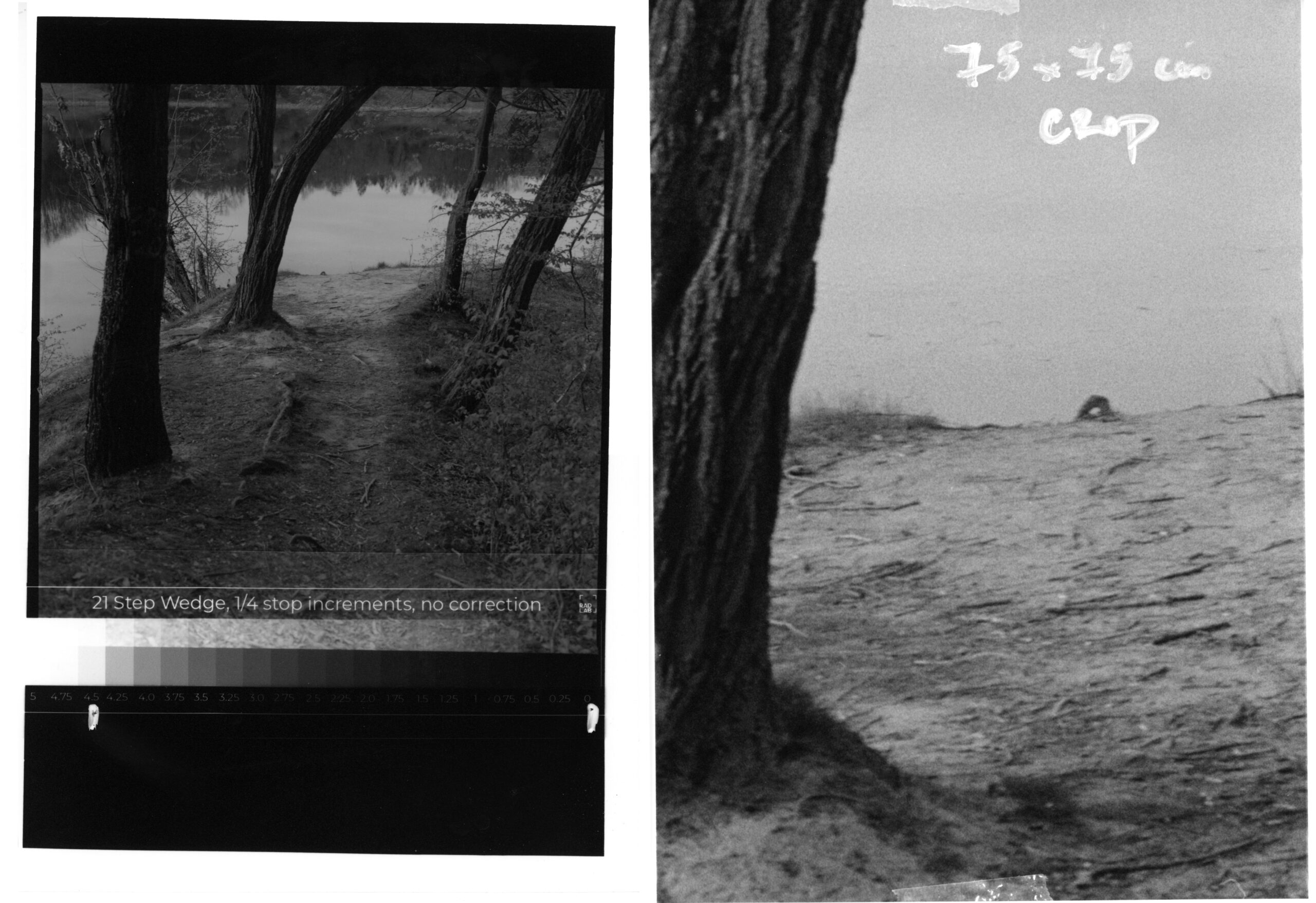
Ilford HP5+ (120) @ D-76 (1+1) | A classic for smooth density transitions, this developer dilution favors continuous tonal gradation over acutance — perfectly fine for medium format, where images already feel sharp. Even exposed with a high-resolving Planar T * @ f/8, the D-76 (1+1) does not emphasize edge acutance, letting the tonal subtleties take the lead.

Kodak TMax 400 @ XT-3 (1+2) | Advertised as the “world’s sharpest” film TMax 400 shows even without magnification that could bring a softer look. What stands out are the beautiful halftones and shadow details XT-3 produces even in 35mm format, giving the image a rich and tangible feeling.
Practical Implications of the Bigger Picture
If I have accumulated more concepts than is comfortable at this point, this is an inevitable part of my attempt to illuminate processes that may initially seem confusing, but in fact offer immense artistic freedom once we learn how to work with them. Here is one more seemingly confusing clarification: every negative possesses macro-, micro-, and local contrast. Macro-contrast describes the overall tonal range of the image, while micro-contrast refers to small tonal transitions within limited areas. It is micro-contrast that is directly related to the sensation of “crispness” and visual sharpness, but it is often achieved at the expense of smooth tonal gradation in fine details.
As the negative format increases, micro-contrast naturally decreases—when enlarging to a given print size, a larger format requires less magnification. In practice, this is one of the reasons photographers seeking maximum tonal subtlety work with large format. Beyond the added “plasticity” that larger negatives bring, they also create the impression of a finer-grained and sharper image—not because the emulsion is different, but because the grain appears smaller relative to the overall image size. It is, of course, entirely possible to create a sharp and compelling image with 35mm film, but the same scene photographed on 4×5 inches will reproduce small tonal transitions with incomparably greater smoothness. In return, the higher micro-contrast of smaller formats often creates a sense of cutting, immediate clarity—an effect that can quite literally “poke the viewer in the eye.”

Ilford HP5+ (4×5”) @ D-76 (1+3) | With x7.8 enlargement this high contrast scene demonstrates the tonal subtlety large format negatives offer. Shadows and highlights maintain smooth separation, showing how macro- and micro-contrast interact to create depth, “plasticity,” and fine-grained rendering that smaller formats can rarely match.
Effective Film Speed
I admit that when I first encountered the concept of variable film speed, I was quite confused. At the time, film speed was the only stable technical foundation I felt I had in photography—after all, it is clearly printed on the film packaging.
The truth is that film development plays a direct role in shaping the visual characteristics of the image in relation to the exposure given to the emulsion. And it is precisely within this mechanism—between exposure and development—that the connection to film speed lies. Film speed is a quantitative measure of emulsion sensitivity, defined by standards such as ASA (American Standards Association), DIN (Deutsche Industrie Norm), and GOST (Gosudarstvennyi Standard). These standards function as a kind of “contract” to which we all agree, under which the manufacturer promises certain film behavior under specific exposure and development conditions. In essence, 400 ISO or 27 DIN is a promise.
In practice, film speed tells us how much light is required to form the first visible and usable density in the negative when developed to a given contrast—that is, a density visually distinct from Dmin. As exposure increases, densities in the negative increase accordingly up to their maximum.
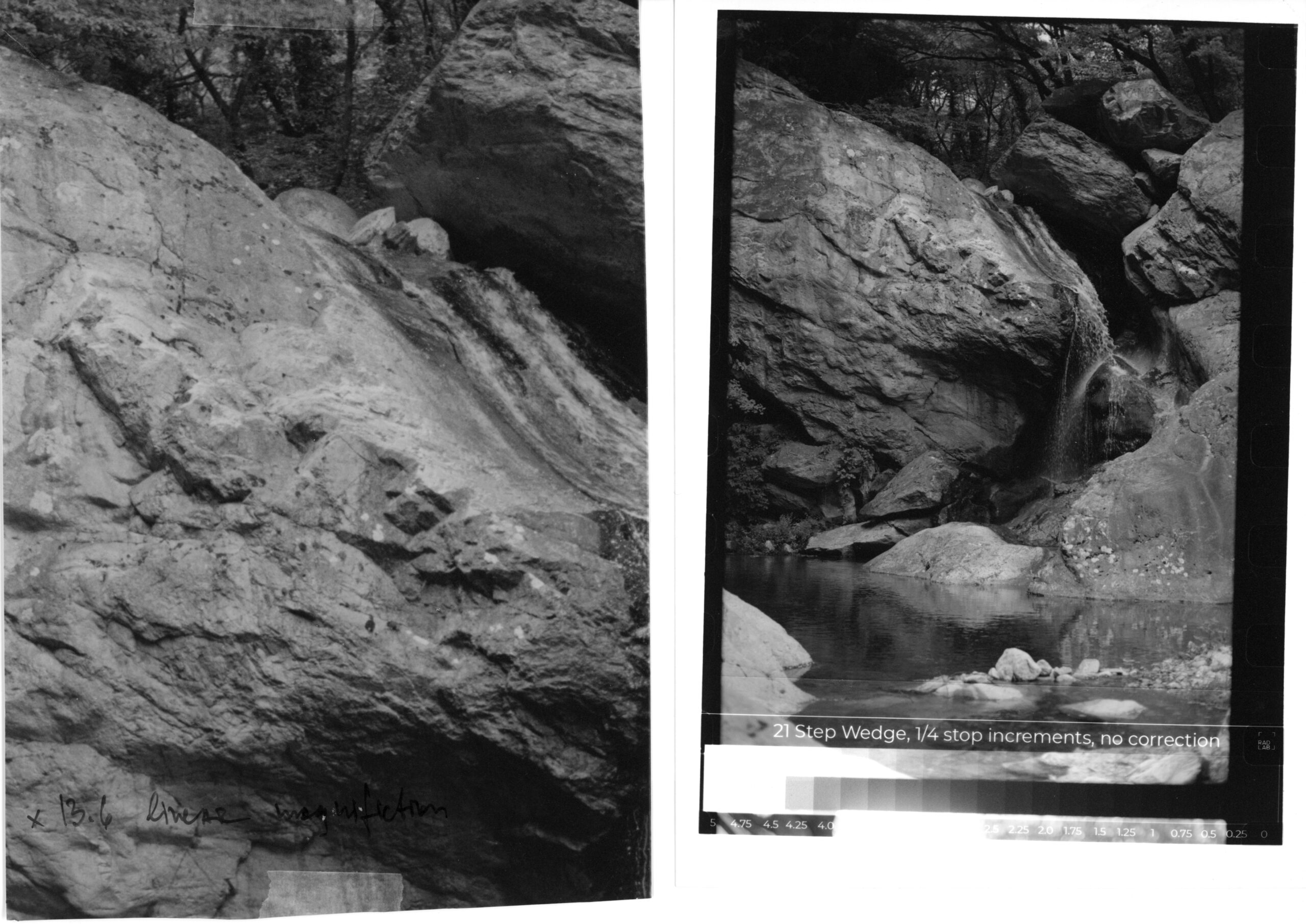
Kodak TMax 400 @ XT-3 (1+3) | This developer has a speed enchasing effect in small dilutions – shadows have weight and richness, with strong micro-contrast even in the low tones. Halftones are smooth, and details in the highlights and midtones pop, making this the more “effective” film speed for extracting texture and depth.
However, the same film, given the same overall exposure and developed to the same contrast, can produce a different initial step of “useful” density. This means that even if the macro-contrast of the negative is similar, the way the lowest densities—those responsible for shadow detail in the positive image—are formed can differ significantly. As mentioned earlier, some developers provide better separation and higher micro-contrast specifically in the darker areas of the positive image. At the level of the negative, this manifests as an earlier and more distinct appearance of density above Dmin.
This initial density is not merely a visual feature; it plays a direct role in the mechanism by which standards determine film speed. In other words, when through film development we achieve higher and more clearly distinguishable shadow density, we effectively shift usable information toward lower exposure levels. In this way, without changing the nominal speed of the emulsion, we determine its effective speed through film development. If the effective speed is lower than the nominal one, the image will suffer from insufficient shadow development. It is important not to confuse this process with deliberate over- or underexposure, commonly referred to as push and pull, which I will examine in more detail in the future.
The effective speed of an emulsion is determined primarily by the type of developer and its chemical composition and can differ noticeably from the nominal factory speed printed on the packaging. Some developers increase effective film speed, others reduce it, and some keep it close to nominal.
Conclusion
If it has not become clear by now, the choice of a specific film development regime always favors certain visual characteristics of the photographic image at the expense of others. All of them participate in the process of translating the latent image into a form visible to us, and in this sense must serve the author’s approach to interpreting reality. Creativity in photography does not arise from processes alone; it resides primarily in the eyes and mind of the author—and those can be trained and cultivated.
A few days ago, in an episode of the OBSCURA podcast, Stefanie Stoeva remarked that photography has recently interested her less for its visual qualities and more for what remains unresolved—hidden, yet appearing in flashes; something that makes you return to it again and again, to “read” it ten or fifteen times. Let this text not adorn analog photography with dull terminology and formulas, but instead open up a qualitatively new field for future approaches and artistic experimentation.
In fact, I would be glad if it remained at least partly unclear—just enough to make you come back to it ten or fifteen times. Like the process it describes, this text remains open, over time, it will be expanded with further visual examples. I would be glad if it also opens a conversation—feel free to share your thoughts and experience in the comments below.
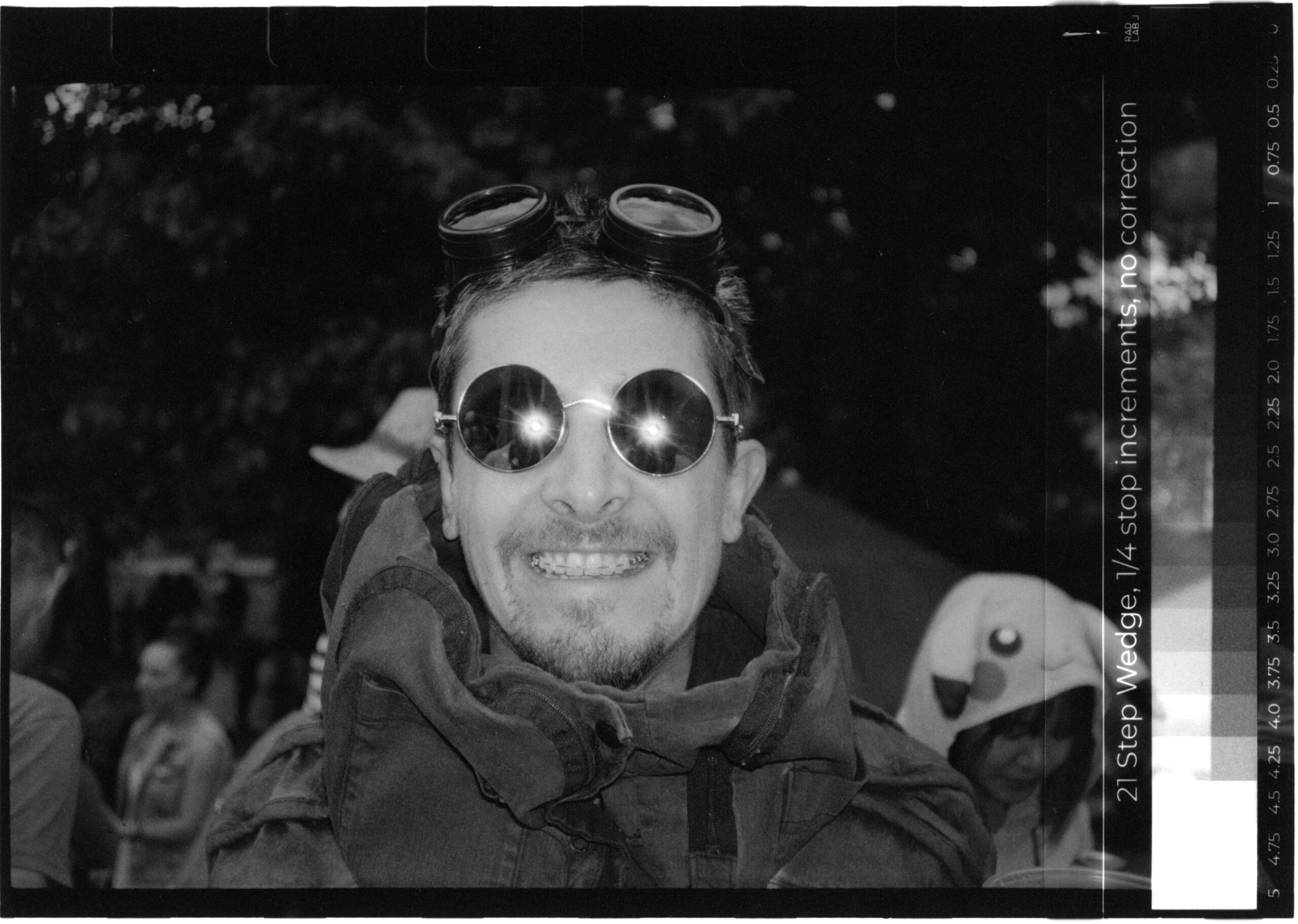
There’s no perfect development approach—every choice enhances some qualities at the expense of others. Understanding these effects lets us make deliberate artistic decisions and shape how reality is expressed in our photography.


Leave A Comment