
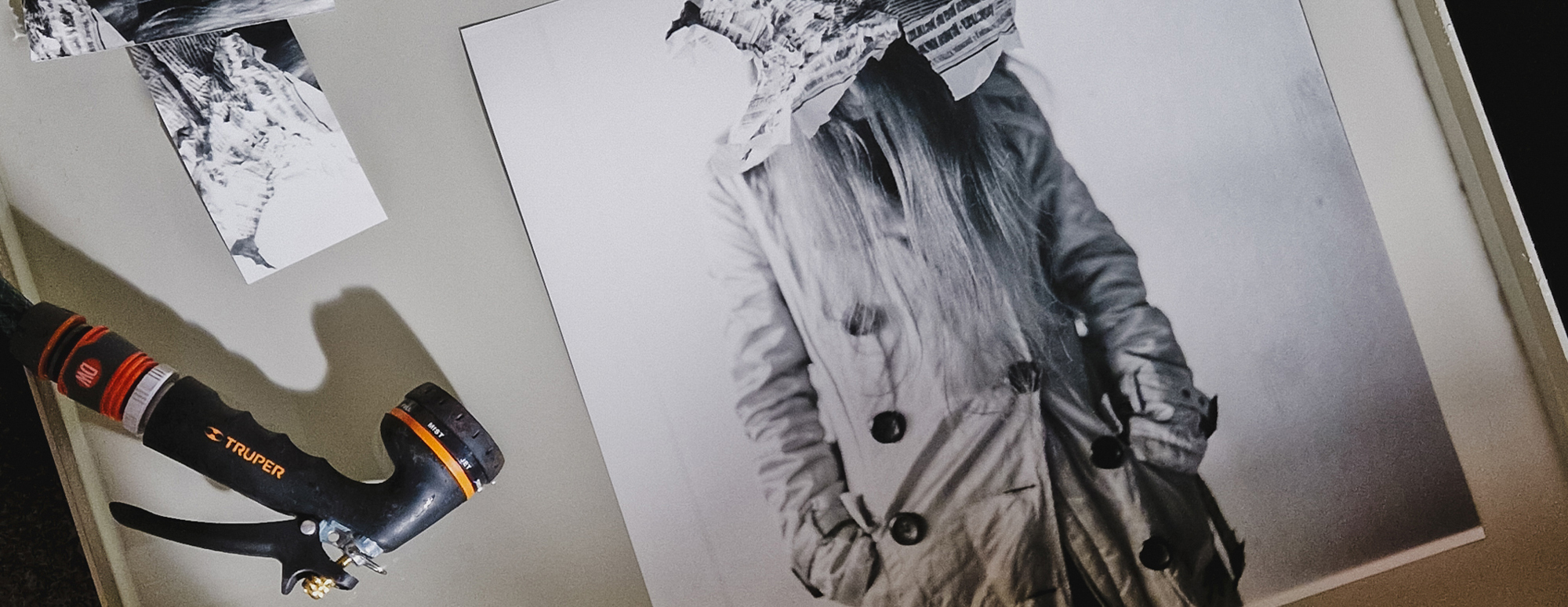
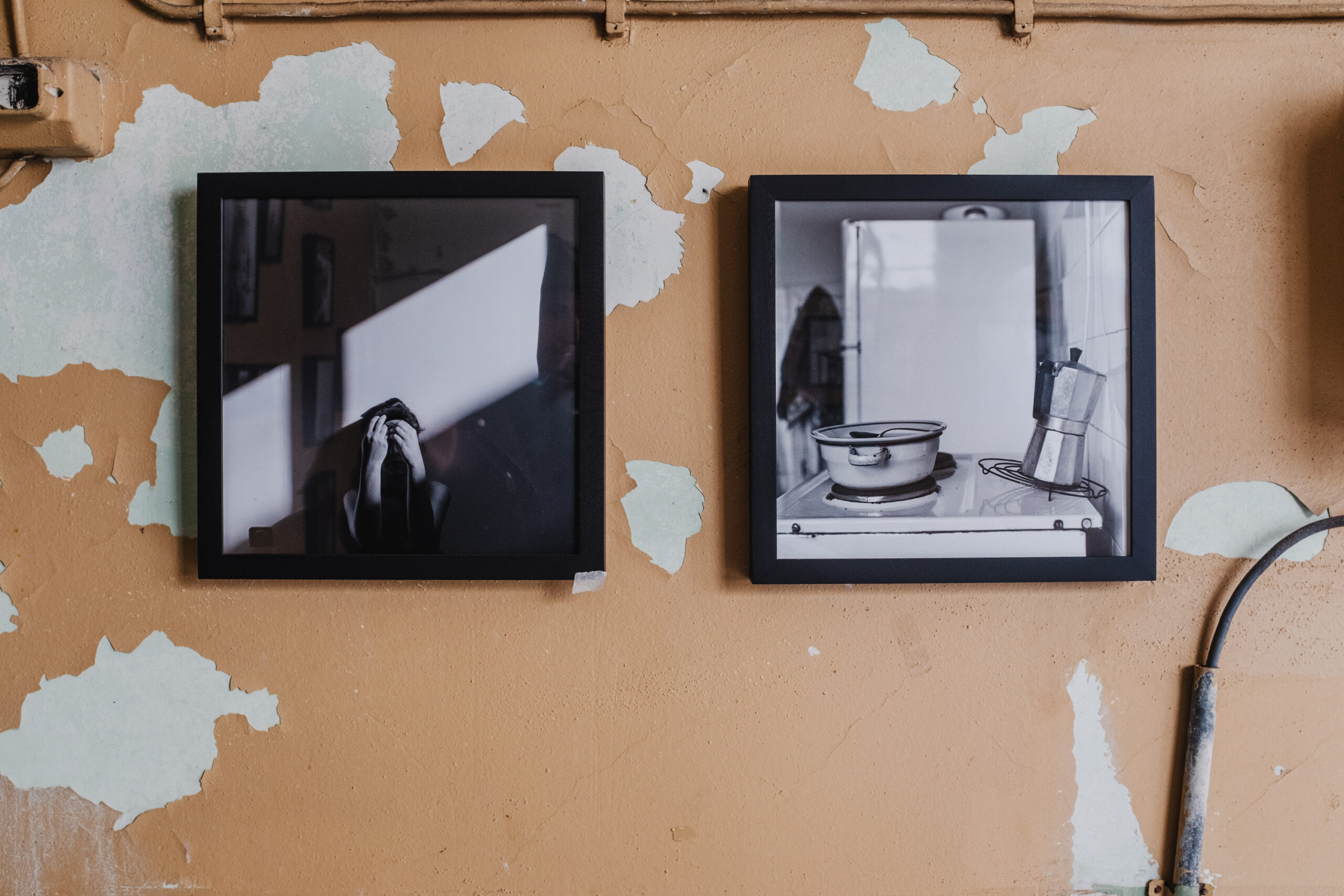
Not long ago, I had the immense pleasure of working on a project created together with Alexandra Patova, as part of the De Vita Solitaria festival. I couldn’t be more grateful for the trust she placed in me — handing over her negatives and giving me the opportunity to work on the series “On Wandering” — photographs made between 2007 and 2017, images that have left a mark on the creative development of an entire generation.
A Meeting with My Old Self
The first two decades of this century hold a special meaning for many of us — they contain our first stumblings into photography, a time when we consciously or unconsciously began shaping our aesthetic sensibilities as both authors and viewers. I was one of them — a student who had just arrived in Sofia from a small provincial town in the fall of 2009.
I still remember walking into a small photo lab at the corner of Solunska and Graf Ignatiev, USB stick in hand, asking them to print five photographs. The images were Alex’s — secretly screen-printed (let’s be honest, stolen) from her Blogspot page, which I sincerely hope will continue to exists. I could already see them on the wall above my desk and didn’t even bother to explain that, since the photographs were square, I expected square prints. Of course, Alex’s compositions looked rather odd, squeezed into the rectangles I later received from the lab with a curt “That’s it.” Still, I looked at them with excitement on the bus ride home, already thinking how I might turn them back into squares. If someone had told me then that years later I’d be printing those same images in a darkroom, I would’ve laughed at the joke.
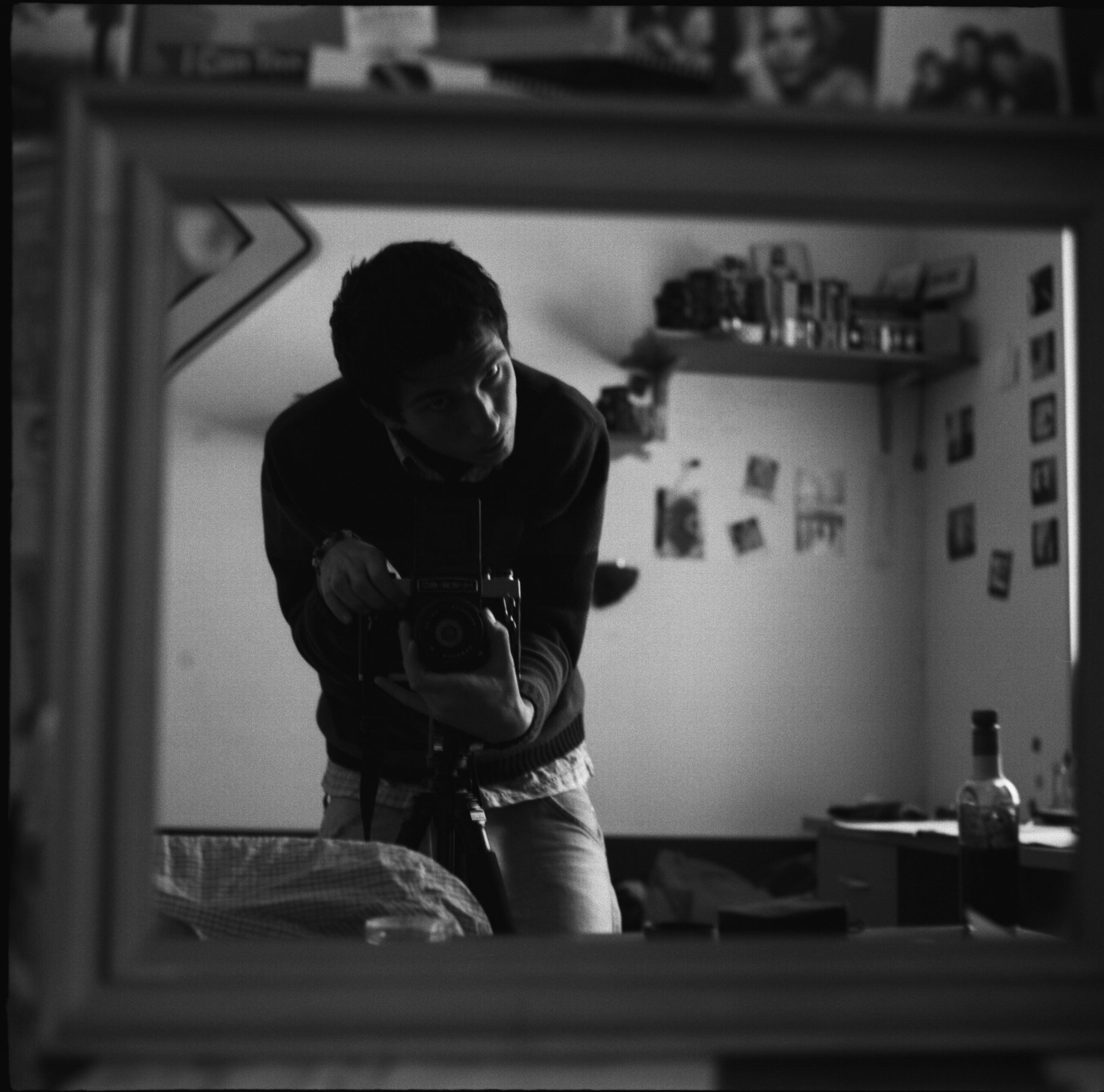
Sofia, 2010
Then followed a long period of silence — until recently, when by chance I came across AlexMalex profile on social media. I messaged her, “Hi, I’ve been a fan… for a long time.” A month later, I gathered the courage to propose that we organize a solo exhibition of her work as part of De Vita Solitaria 2025. Her “yes” turned into a selection of forty photographs. The series took shape under the title “On Wandering”, and for me — it became a meeting with my old self.
And suddenly it was September. I opened a cardboard envelope that had just arrived in Gabrovo and held the negatives in my hands — real images, made of silver, in 120 format and some in 4×5”. This time, they hadn’t come to me through a monitor from some parallel universe. I could see their densities, their dust, their development traces. Any doubts I’d had up to that moment disappeared — it was all real. I had two weeks — or rather, their afternoons that slowly turned into evenings and then into late night printing sessions — surrounded by negatives and the responsibility to transform them into silver-gelatine prints.
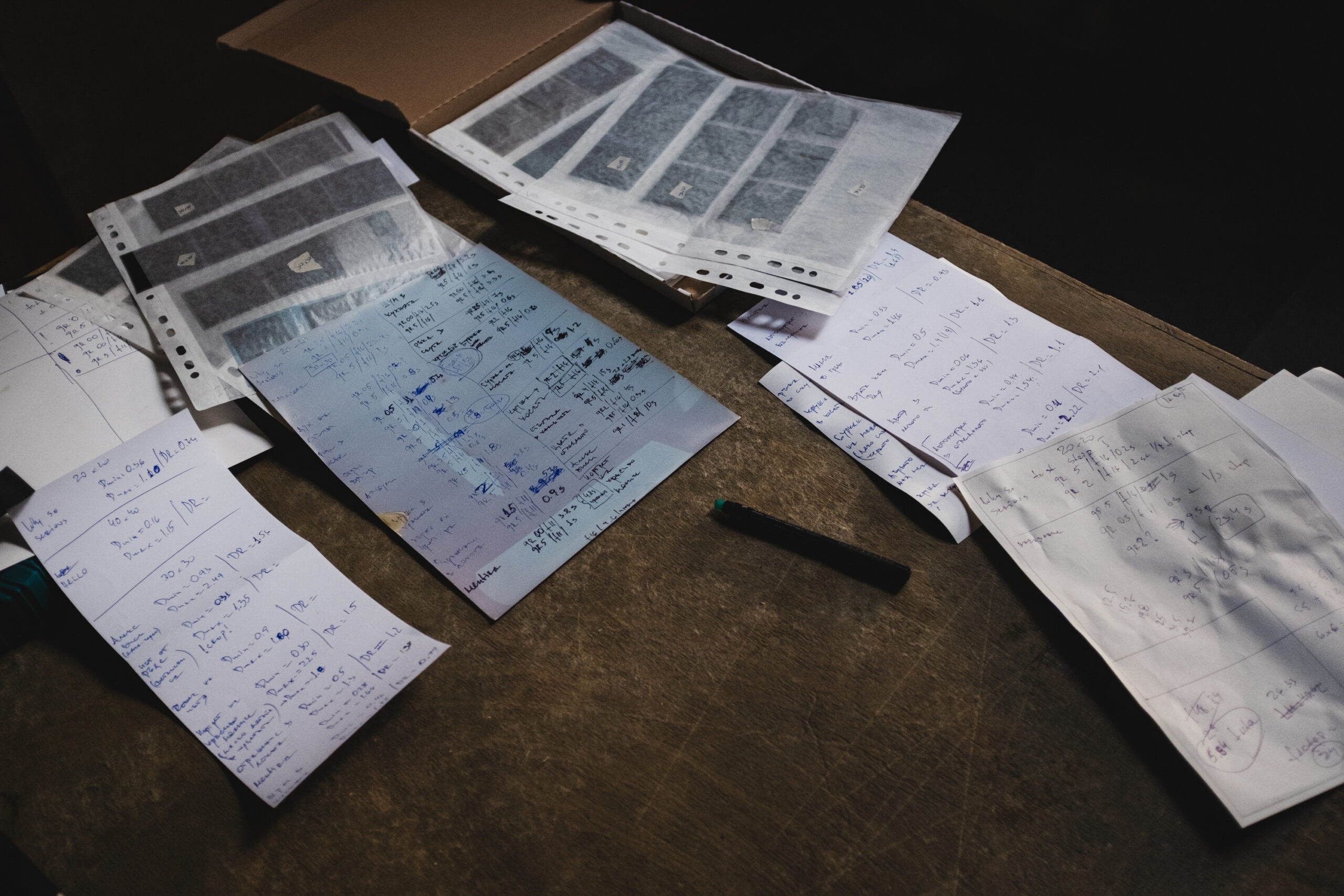
Негативите на Алекс и работните ми бележки
The Ritual Called the Silver-Gelatin Process
The classic method of photographic printing in a darkroom is known as the silver-gelatin process. It has been in use since the late 19th century and for most of the 20th, remained the primary means of creating and distributing positive photographic images. Like most analog practices, it carries traces of something profoundly human — materiality, focus and patience.
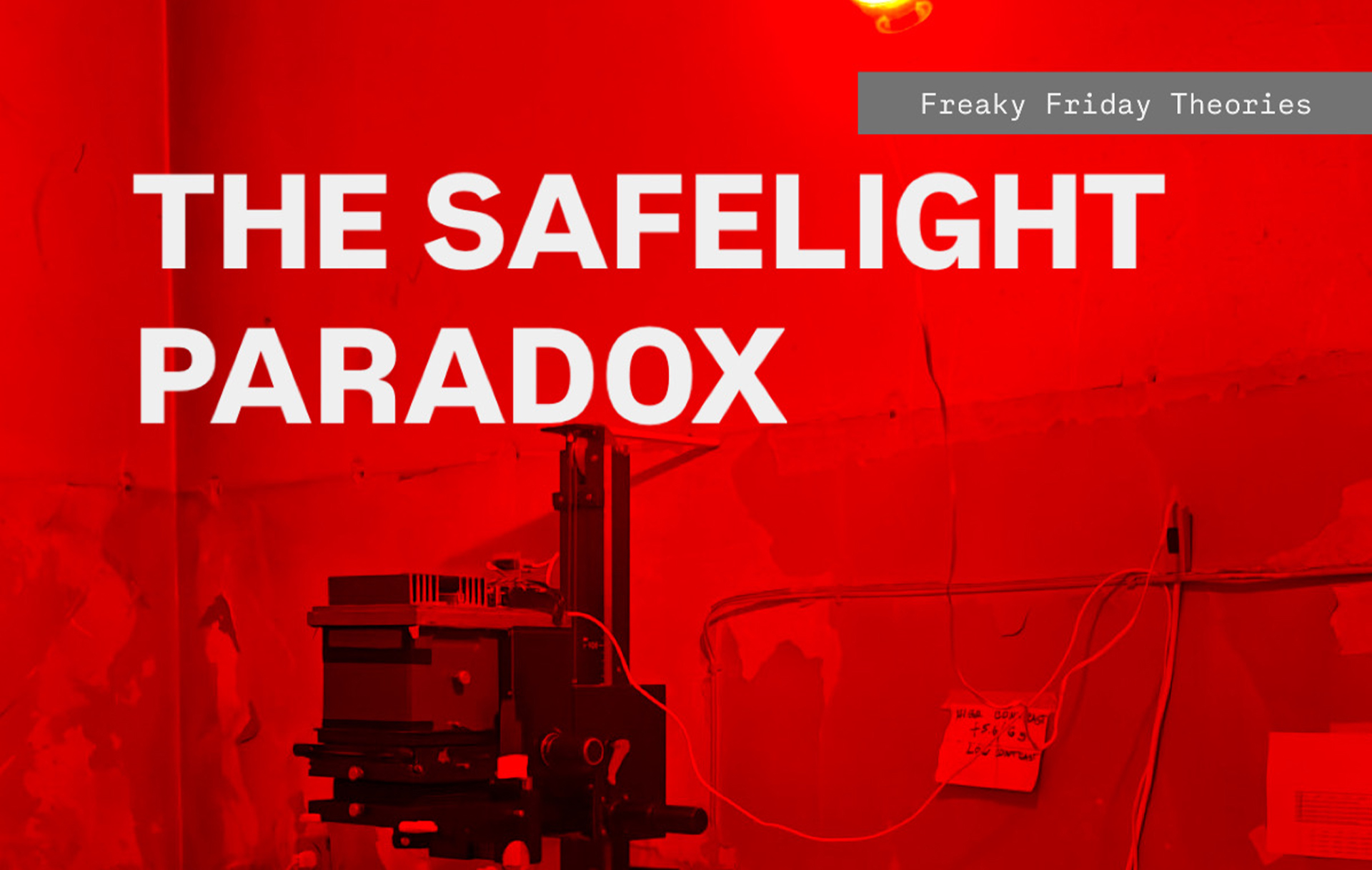
The process takes place in a photographic laboratory, known as the darkroom. It is completely sealed off from outside light — and within it, I feel at ease. The only illumination comes from a specialized lamp, called safelight that emits light within a narrow wavelength. The orthochromatic photographic papers used for the silver-gelatin process are “blind” to this light, which allows us to show them only what we choose — the shadow of the negative. That shadow exists only in the brief moment of exposure, controlled most often by a timer.
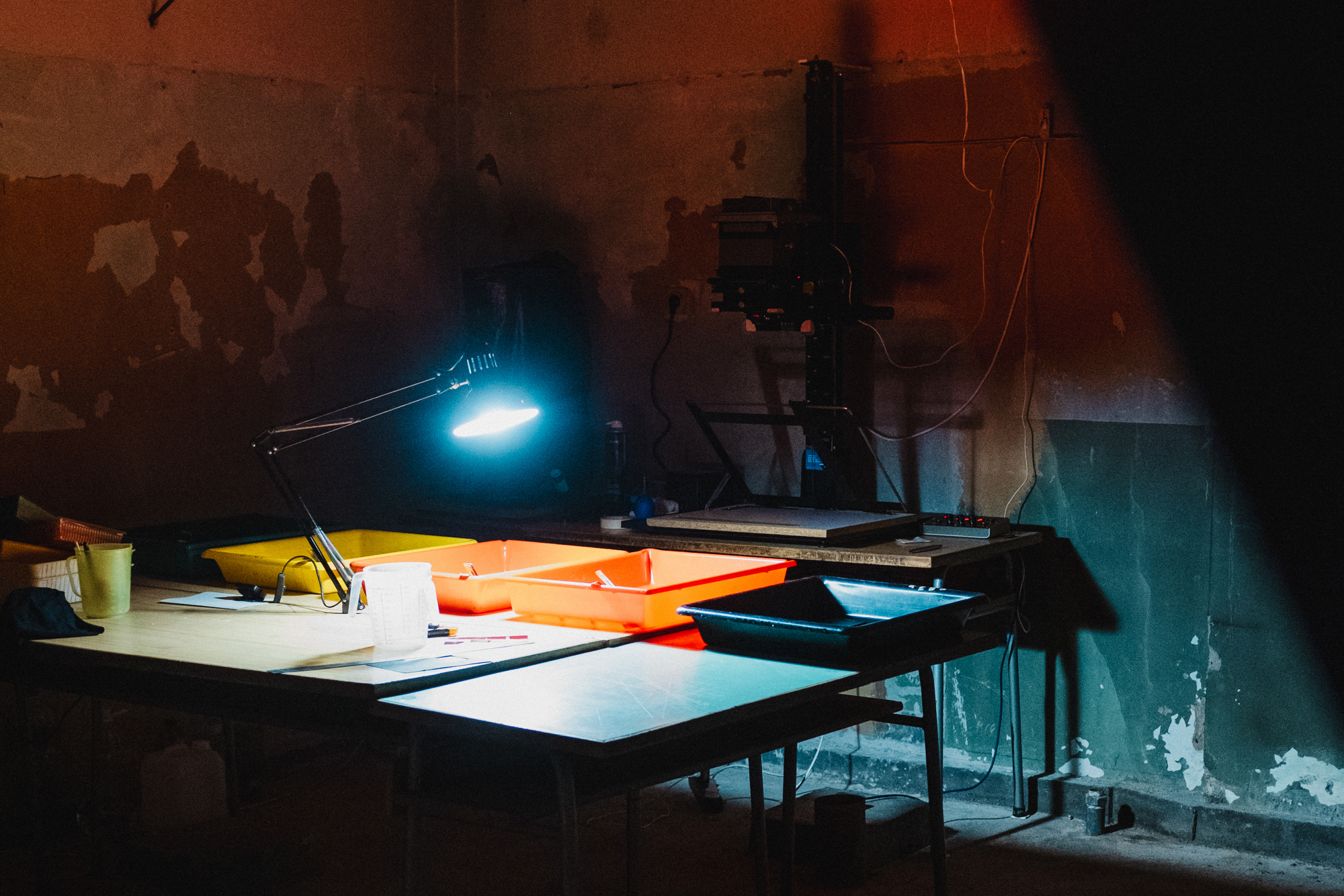
RadLab
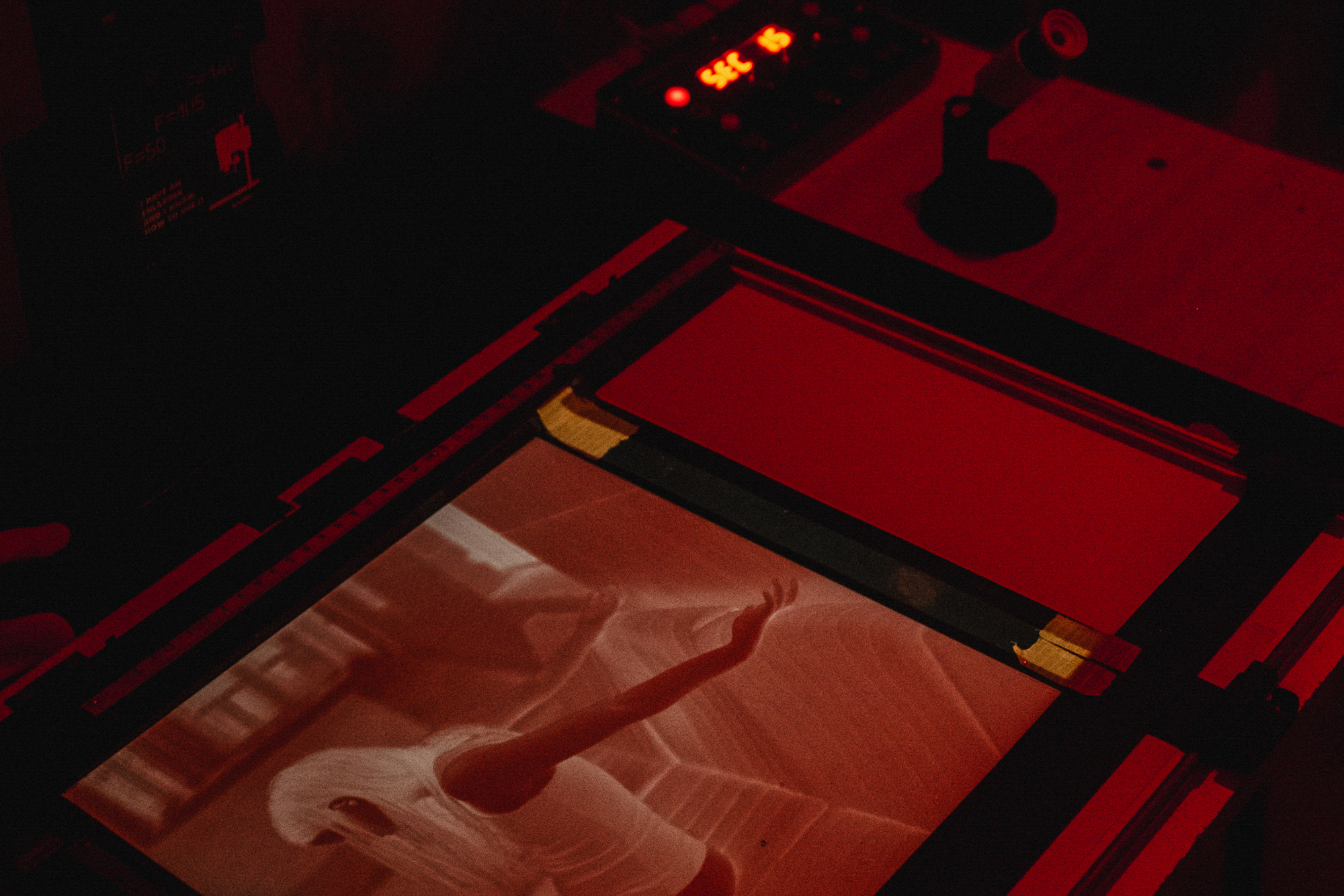
Enlarged projection of a negative over a framing mask
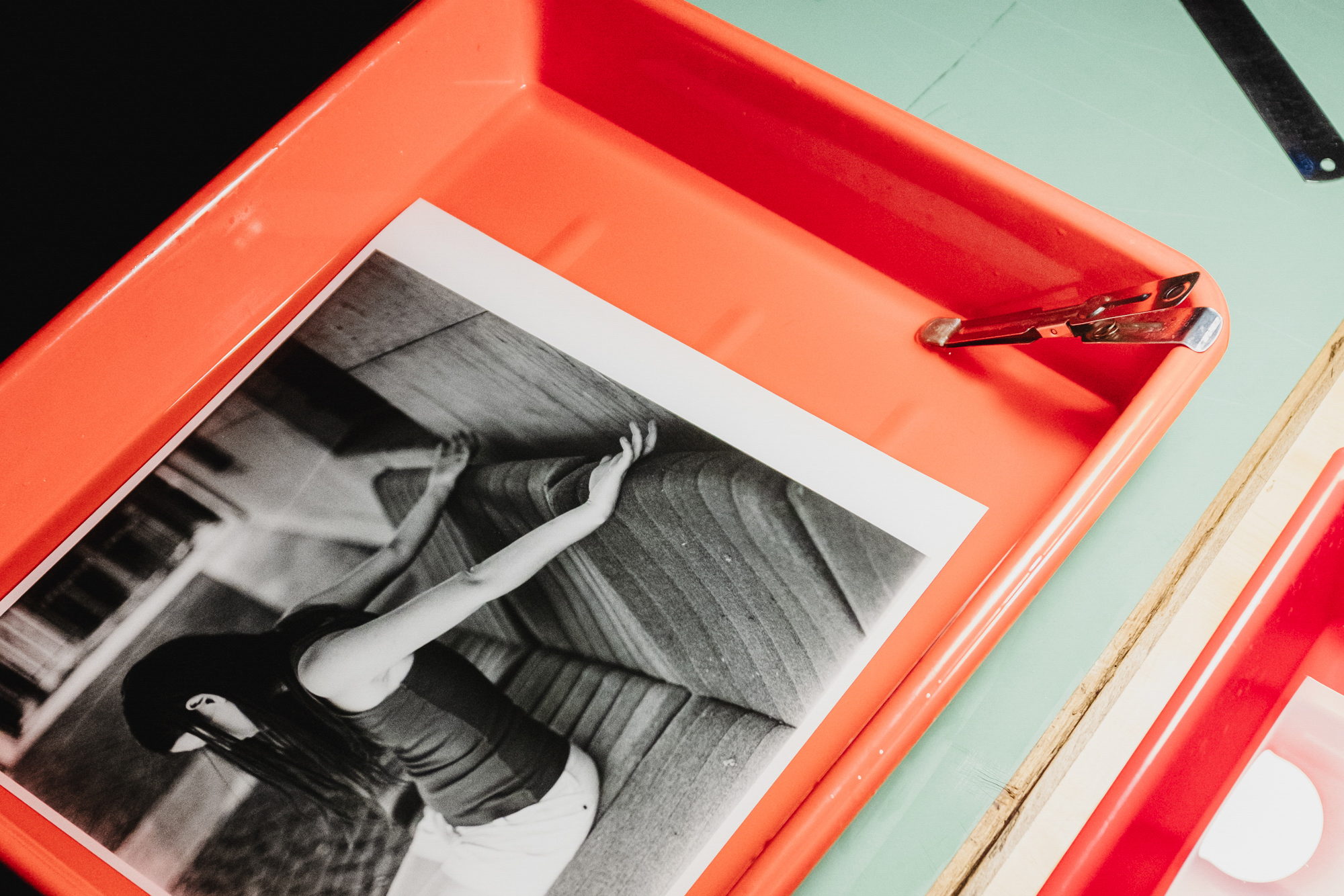
For this project, I worked with Ilford Multigrade RC Deluxe Pearl variable-contrast paper and the corresponding red safelight. Each negative was carefully placed in the enlarger — the machine that projects the image from the negative onto the paper. Before that, I meticulously cleaned each negative of dust and other artifacts. The enlarger allows me to adjust the scale of projection and create prints in different sizes.
Then comes the moment of development, when the silver halides in the paper’s emulsion transform into metallic silver and the image becomes visible to the eye. The processing unfolds through a sequence of chemical baths. In this case, I used D-72 developer (1+1) for two minutes at 20°C — to make sure every exposed halide would reveal. Next comes a stop bath — 15 seconds at pH 3 — which halts the action of the developer and draws a line between what must remain and what must never appear. After that, two fixing baths, two minutes each — to ensure there’s no going back. Finally, a 15-minute wash — so that only the silver remains on the paper, precisely where and how I want it.
Every print goes down this road.
Three Questions for Happiness
Before beginning the actual printing, I had to consider a few important things. Since this was not my own photography exhibition, I needed to minimize — or better yet, completely remove — my personal interpretations of the images as they emerged in print. From experience, I know that there are images we’ve learned to live with. In my own archive, I have negatives I scanned ages ago and then tucked away in some box, untouched ever since. I have no recollection of what adjustments I made to the digital versions, or to what extent they reflected the information on the negative. But that doesn’t matter — that photograph lives within me in that very form. That is the image.
I had no idea if that was also the case with Alex’s work, and it felt trivial — even inappropriate — to ask about her editing process. But since the final selection included frames taken from publications over a decade old, I decided to follow the visual character of the digital images — with the full awareness that every device we view them on likely renders them differently. It was my responsibility to translate Alexandra’s photographs into their analog form — in the way she had seen them, and in the way we all have come to know them. The degree of deviation between each photograph and its negative was something I would have to discover along the way.
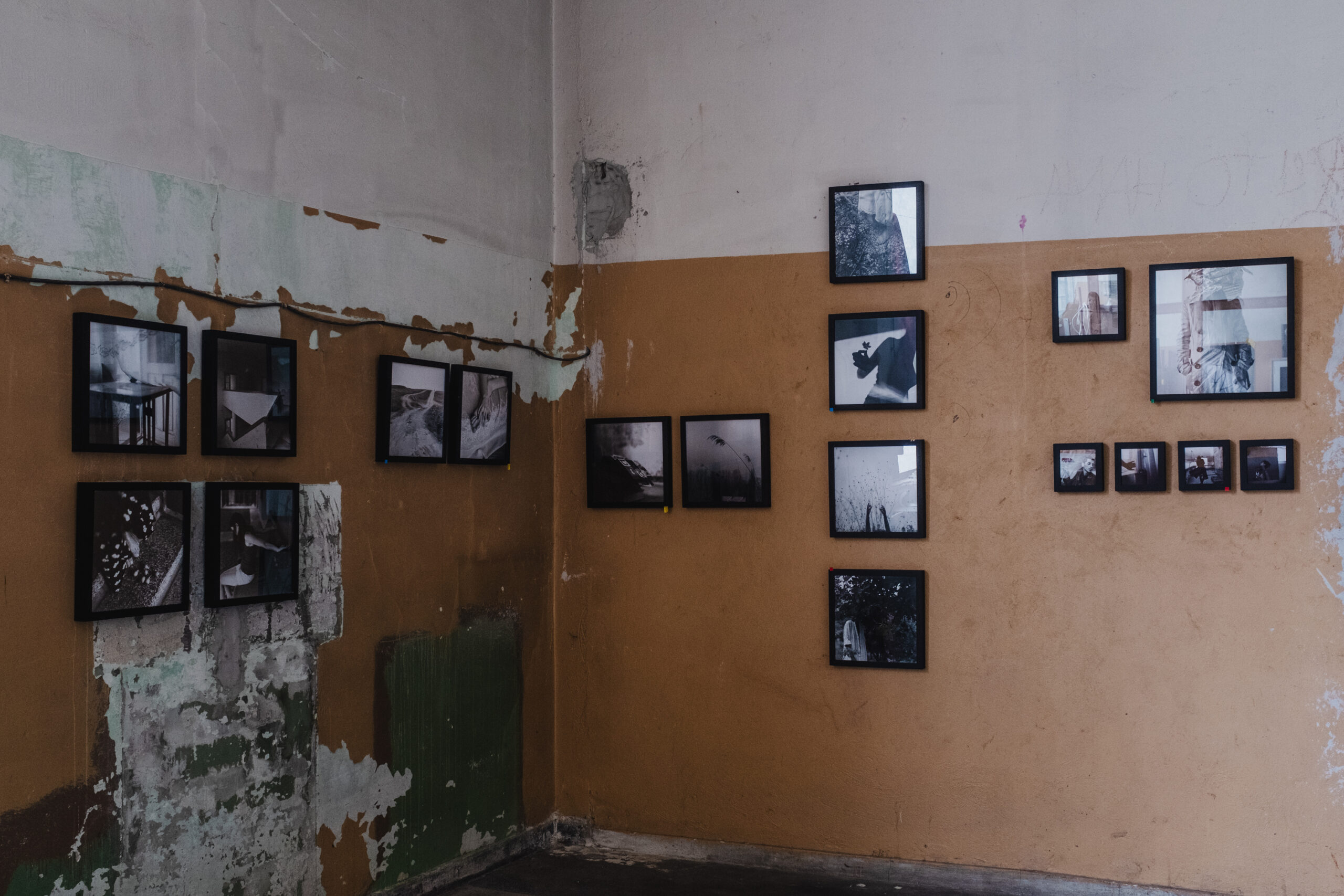
Part of the exhibition “On Wandering,” @ RadLab (Christo & Jean-Claude Center)
The greater challenge, however, was harmonizing the prints for the exhibition format. These photographs had to work together — to sound in unison. There’s a delicate balance between how much one can “nudge” a print so it sits comfortably among the others — in terms of contrast and tonal weight — and how subtle that adjustment must be so that each image still speaks in the author’s visual language. There, perhaps, you can find my small lie within the exhibition.
Another consideration was that I was used to seeing these images on light emitting screens, where brightness and dynamic range define their rhythm. Now I had to translate them into the language of paper — a medium that doesn’t emit but reflects light, and carries its own internal dynamic.
And finally, I had to think about the chronotope of the exhibition — the specific space and the time of day, with its particular lighting, in which the works would be seen.
And to indulge myself completely, I asked myself one last question:
“These images will not remain in this space eternally. They’re going to take on a new life elsewhere. If I wish to be genuinely happy, they must appear every bit as captivating there as they are now. How do I accomplish this?”
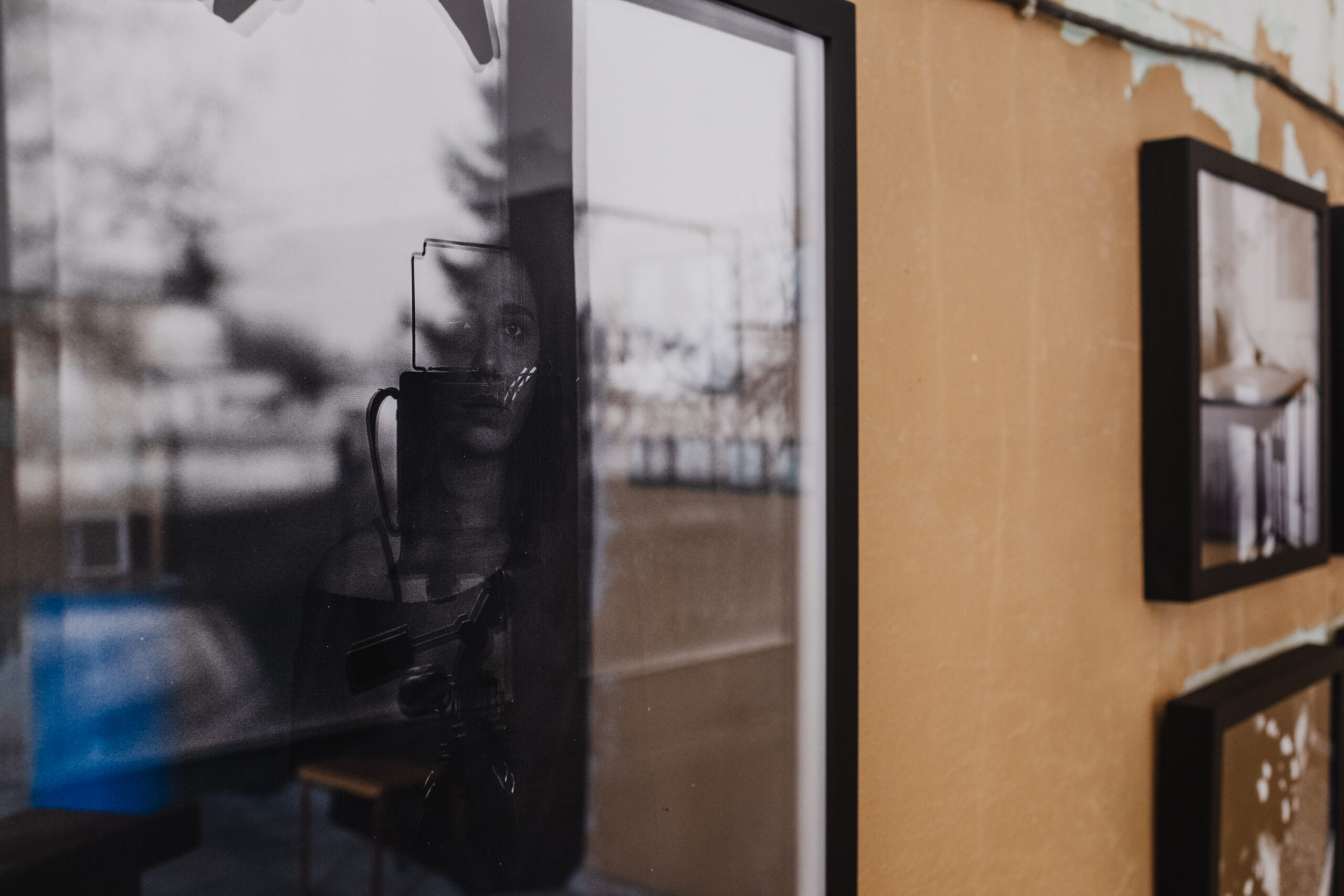
The Printmaker’s Experience
If I said that printing photographs by hand isn’t a solitary pursuit, I’d be lying. And since I’ve already lied about something else, I won’t say that.
Apart from being time-consuming, the silver-gelatin process is also rather expensive in terms of materials. I was determined to minimize the number of trials needed to reach the desired look for each image. It was clear that every final print in the exhibition would be in edition of one — but how many test prints would it take? Ideally, as few as possible.
The exhibition includes four print sizes — 13×13 cm, 20×20 cm, 30×30 cm, and 40×50 cm — made respectively from two negative formats: 6×6 cm and 4×5’’. The smaller ones, naturally, would be printed at full size. For the larger prints, however, I couldn’t afford to make test copies at actual enlargement — not only for economic reasons, but also for practical ones. Large prints require larger trays, more chemicals, and more room to maneuver sheets of paper the size of small tablecloths. The standard practice is to make test prints in a smaller size and then recalculate the enlarger settings for the intended enlarement. But I had deadlines didn’t allow for that approach, so I decided to enragle them directly, starting with the smallest and gradually scaling up.
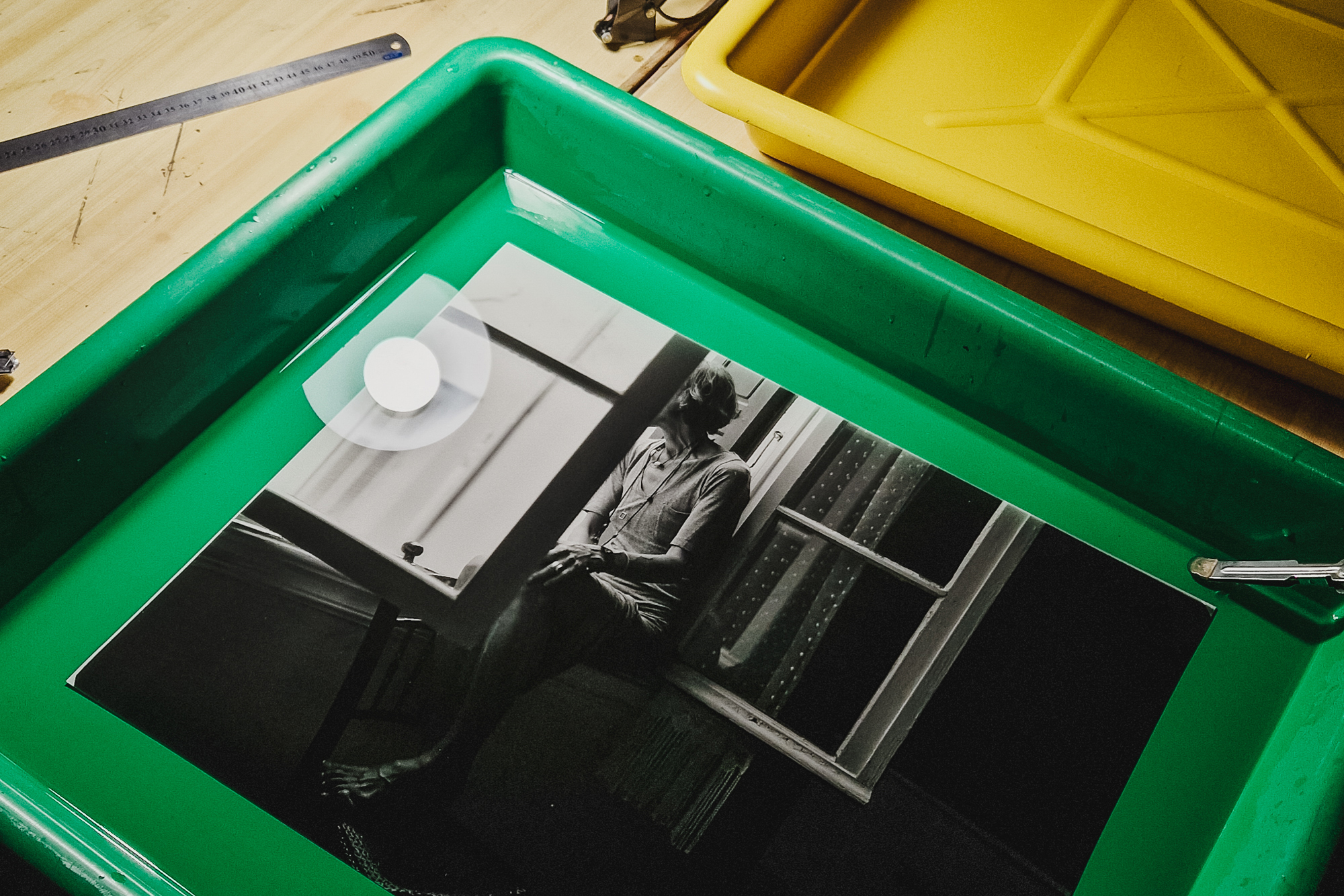
40х50 см print, enlarged from 4×5” large format negative
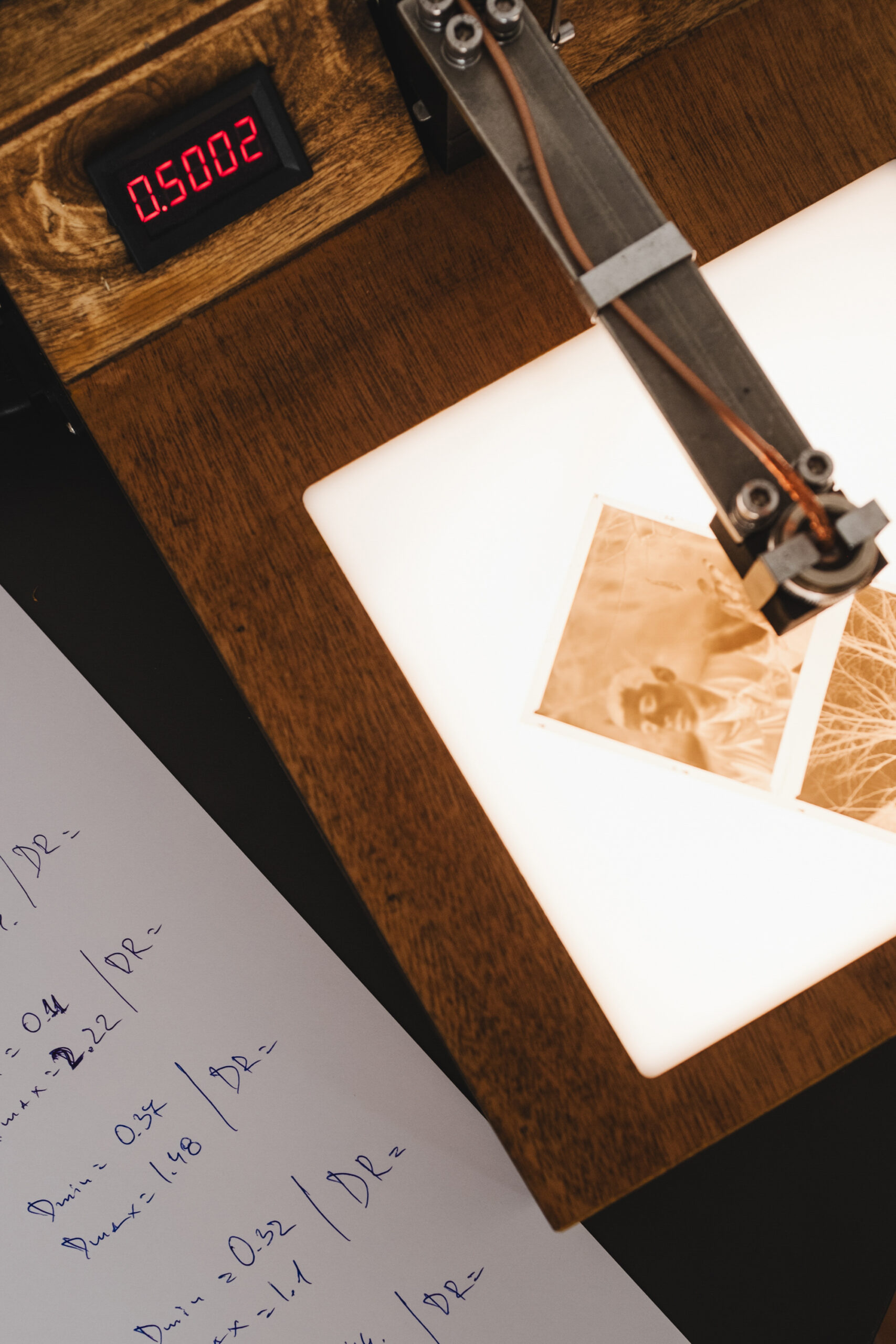
The printmaking process began with a densitometric analysis of each negative to determine its dynamic range. This helped me evaluate the contrast and align the paper with it— to produce a true positive representation of the negative image. Is that the image I’m after? Of course not. But it gives me a solid starting point and a trajectory of movement. The rest depends on personal skills, intuition and experience.
Since most of the photographs are square and photographic paper usually comes in rectangular sheets, I knew I’d be cutting it down. I decided to use the leftover strips for test prints — choosing, for each frame, the most representative area to testprint. The goal was to work with fragments that could represent the tonal range of the whole image — my own version of an inductive–deductive approach. Once I nailed a convincing positive representation of the negative, I had to ask myself: does it reflect the author’s interpretation of the scene? Is this the image we all live with? If not, how do I adjust the contast and the exposure?
That’s precisely why I chose variable contrast paper for this exhibition. I wasn’t sure whether the more traditional techniques — dodging and burning, which also work with fixed-grade papers — would give me enough flexibility to reach the visual identity of Alexandra’s photographs. Variable contrast papers, on the other hand, allow far greater control over local contrast. The enlarger’s light passes through color filters of varying wavelengths (in my case the enlarger has built-in LED head with contrast control), which shape the tonal distribution and local contrast of the print. Exposure time is then calibrated according to the filtration, and often one resorts to what’s known as split grading — combining different contrast filters during the exposure of a single print.
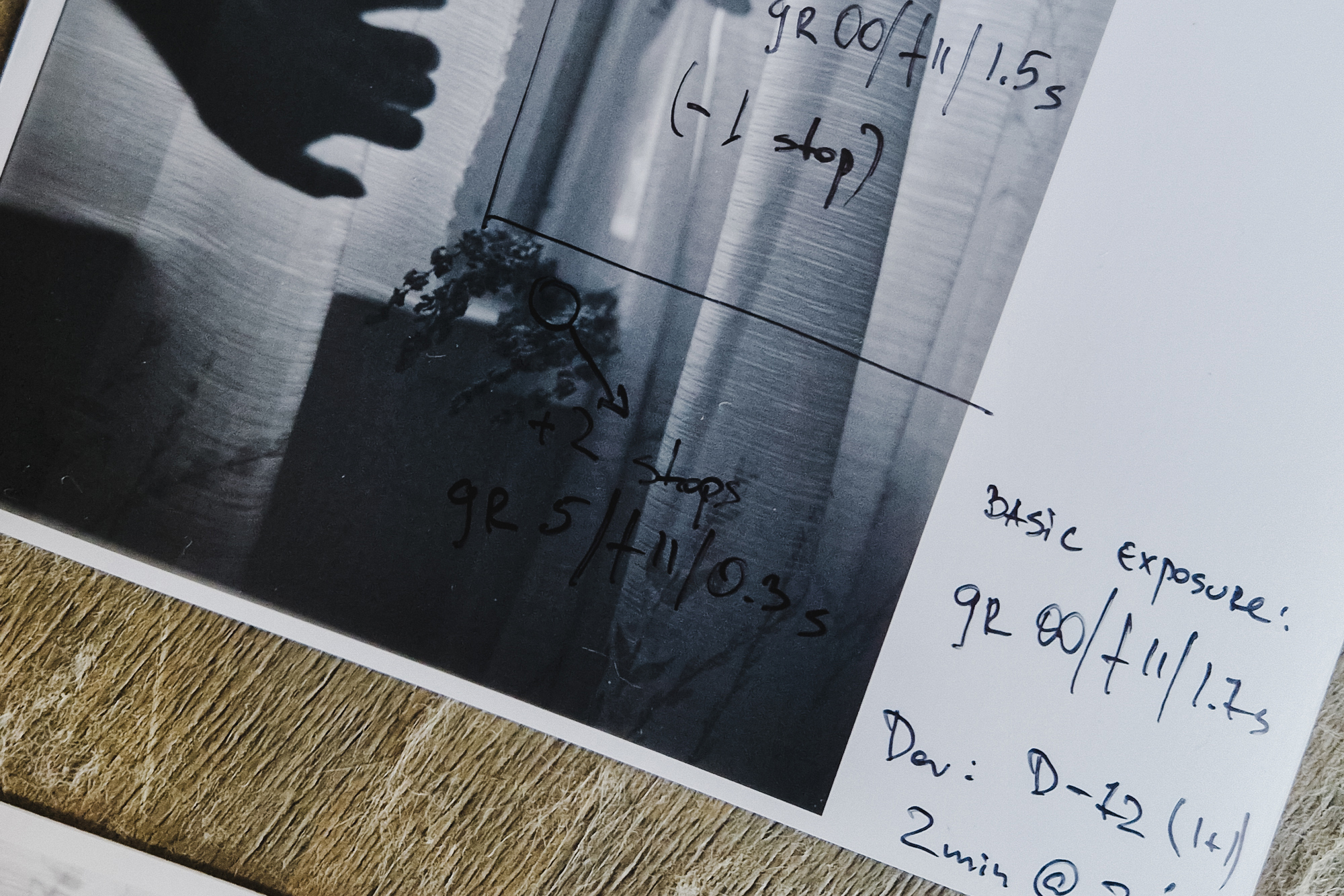
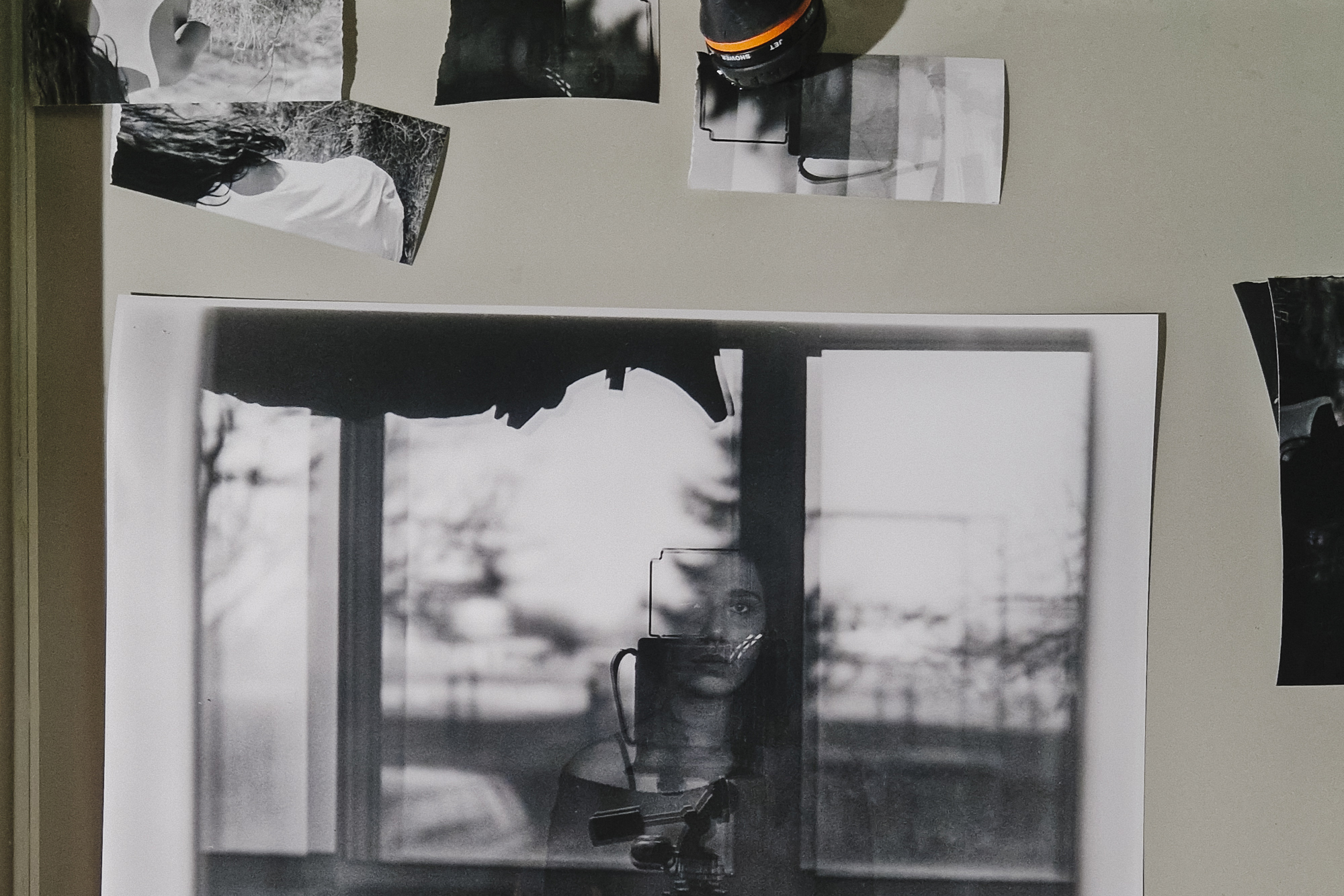
Using these methods, I made a series of local test prints — sometimes more than one for a single photograph — each representing a crucial section of the image. Once I was satisfied, I applied those settings to the whole image.
And no, I’m not claiming that every full-scale print came out perfect from the start — especially when compared with the others, or once it was hung on the wall where it would be exhibited. Minor adjustments were often needed, prompted by all the factors I’ve already mentioned. But still, quite a few prints reached their final form on the very first attempt. Naturally, there were also the occasional failures — a speck of dust on the paper, a forgotten wide open aperture on the enlarger, a poor choice of test section, or other small acts of mischief. If so, I’d start the whole process from the scratch.
Perhaps now, the phrase “a solitary pursuit” carries a little more weight.
Why This Matters
Every analogue print carries someone’s experience and holds the echo of their presence.
In a world where images are made instantly, reversibly, and almost without substance, the analogue process brings a different kind of substance back into the equation. It reminds us that photography is not only a way of seeing — it’s also a way of being present.
If you share this feeling, you’re always welcome at RadLab — light-sealed as it may be, its doors are always open.
In this article I’m presenting one very specific, perhaps even conservative, way of working — but let’s not forget the thousands of possibilities for improvisation that exist within all these variables in the darkroom processing. The print is just one of the many ways to interpret visually. This is my way of thinking about photography.
Without conceptualizing further, I’ll leave the rest to AlexMalex prints. If you ever have the chance to pause quietly in front of one — don’t miss it. They all carry traces of presence.
And if you’d like one of them to become part of your own collection, you can reach out to us or contact Alexandra Patova directly.
Leave A Comment