
In the darkroom, “red” does not always mean “safe.” For this edition of Freaky Friday Theories, we explored the gap between vintage standards and modern emulsion science – in other words how variable darkroom safelight equipment affects fresh photosensitive emulsions. We decided to test the limits of what our papers can handle before the highlights surrender to the fog. By putting modern industry standards to stress tests, we aimed to uncover who is actually protecting your work and who is working against you in the dark.
The Stress Test: A 5-Minute Walkthrough
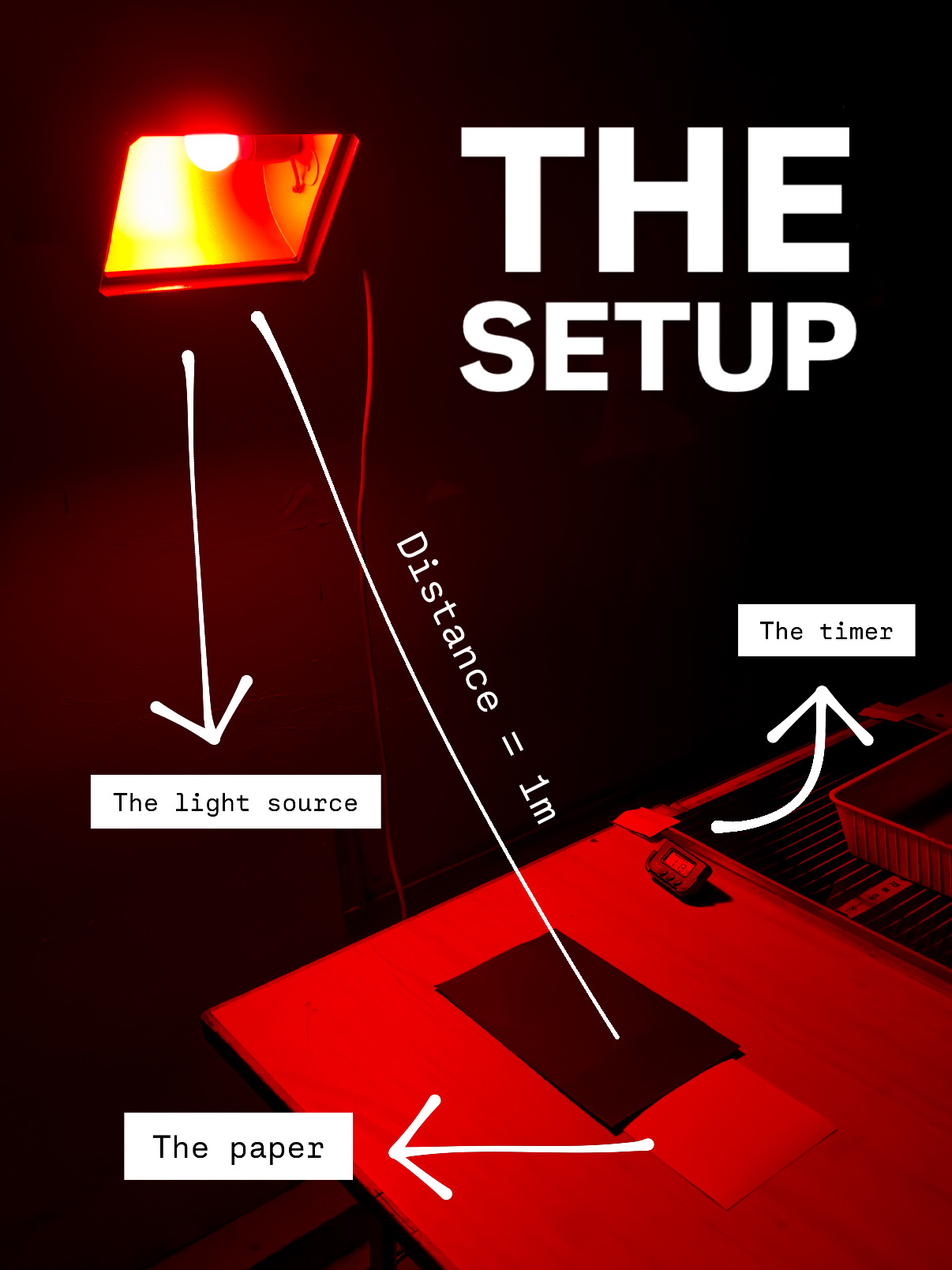
In a working darkroom, your paper is vulnerable from the moment it leaves the black plastic sleeve. For our methodology, we set a fixed exposure distance of exactly 1 meter from the safelight and tested at stepwedge intervals of 0.5, 1, 2, 3 and 5 minutes exposure.
Why 5 minutes? Because this is our “Golden Standard” for a full processing cycle. It represents the total time required for the paper to remain sensitive while you work:
-
Extracting and formatting the paper.
-
Loading the frame and fine-tuning the composition.
-
The actual exposure.
-
The journey through the developer until the moment it get fixed.
If your safelight causes even the slightest change in Reflective Density (RD) during this window, you are being doomed. Your delicate Zone 9 highlights will turn to mud and your deep blacks will flatten. If a light source cannot survive 5 minutes at 1 meter, it isn’t a safelight, it’s a liability.
The Methodology: Hunting for the Threshold
The “Threshold Exposure” logic is what separates objective lab work from guesswork. Most printermakers rely on the “coin test”—throwing a coin on a blank sheet of paper and looking for a silhouette after a certain time. We consider this a fundamental mistake.
Safelight fogging is a hidden parasite. On its own, safelight exposure might stay below the threshold of a blank sheet and remain invisible. However, once your enlarger “primes” the paper during an actual print, that extra safelight energy pushes the emulsion over the limit. It is a cumulative effect. We don’t test for what you see on a blank sheet,but for what actually ruins your final print.
The Subjects: We chose Ilford Multigrade V Satin and Fomaspeed Variant 312. These are modern Variable Contrast (VC) papers with multiple emulsion layers. Because they are designed to respond to a wide spectrum of light to allow manual control contrast, they are the ultimate test subjects. If a light is safe for these, it is safe for any photosensitive paper.
The Treshhold xposure: Each test sheet was split into “Pre-exposed” and “Non-exposed” zones. We used a 0.2s @f8 LED enlarger burst from a height of 450mm to hit the threshold point. This “primes” the paper, making any spectral leakage from the safelights immediately visible in the most sensitive tonal areas.
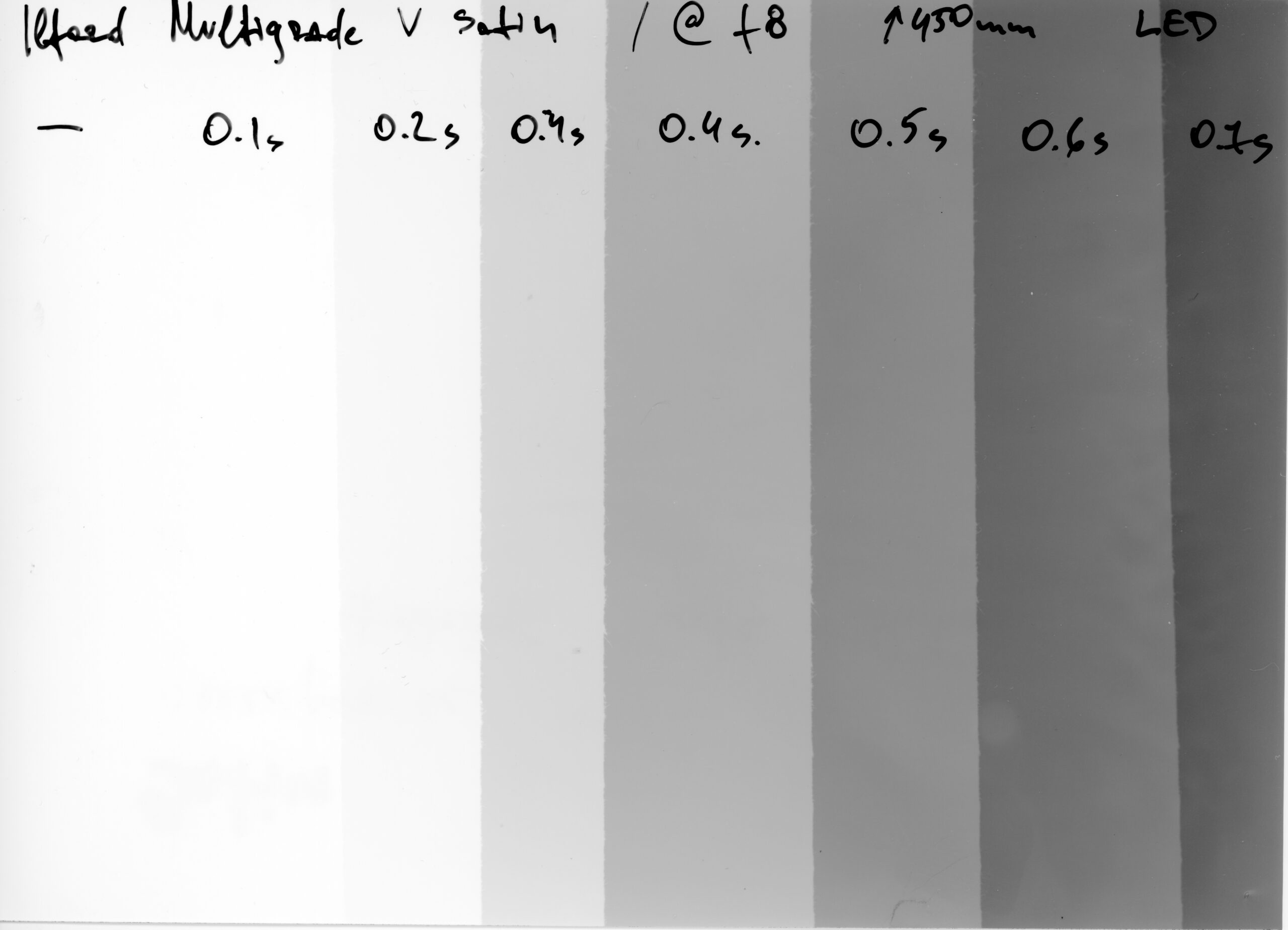
Calibration: The enlarger was locked at 450mm to ensure uniform light distribution. The 0.2s @f/8 burst provides the base energy needed to move the silver halides just over the point of visible reduction, preparing them to reveal any additional safelight stress. Eventually both papers reacted identically.
The Case Studies: Visual Examination
1. The Industry Standards (15W Bulb + Legacy Filters)
Legacy darkroom filters were engineered for a different era of photochemistry. To test these, we used a standard 15W tungsten bulb housed in a traditional enclosure. This setup represents the “Old Guard”—the equipment found in thousands of community and home darkrooms worldwide. Our goal was to see if these classic spectral barriers can still handle the increased complexity of modern, multi-layered emulsions.
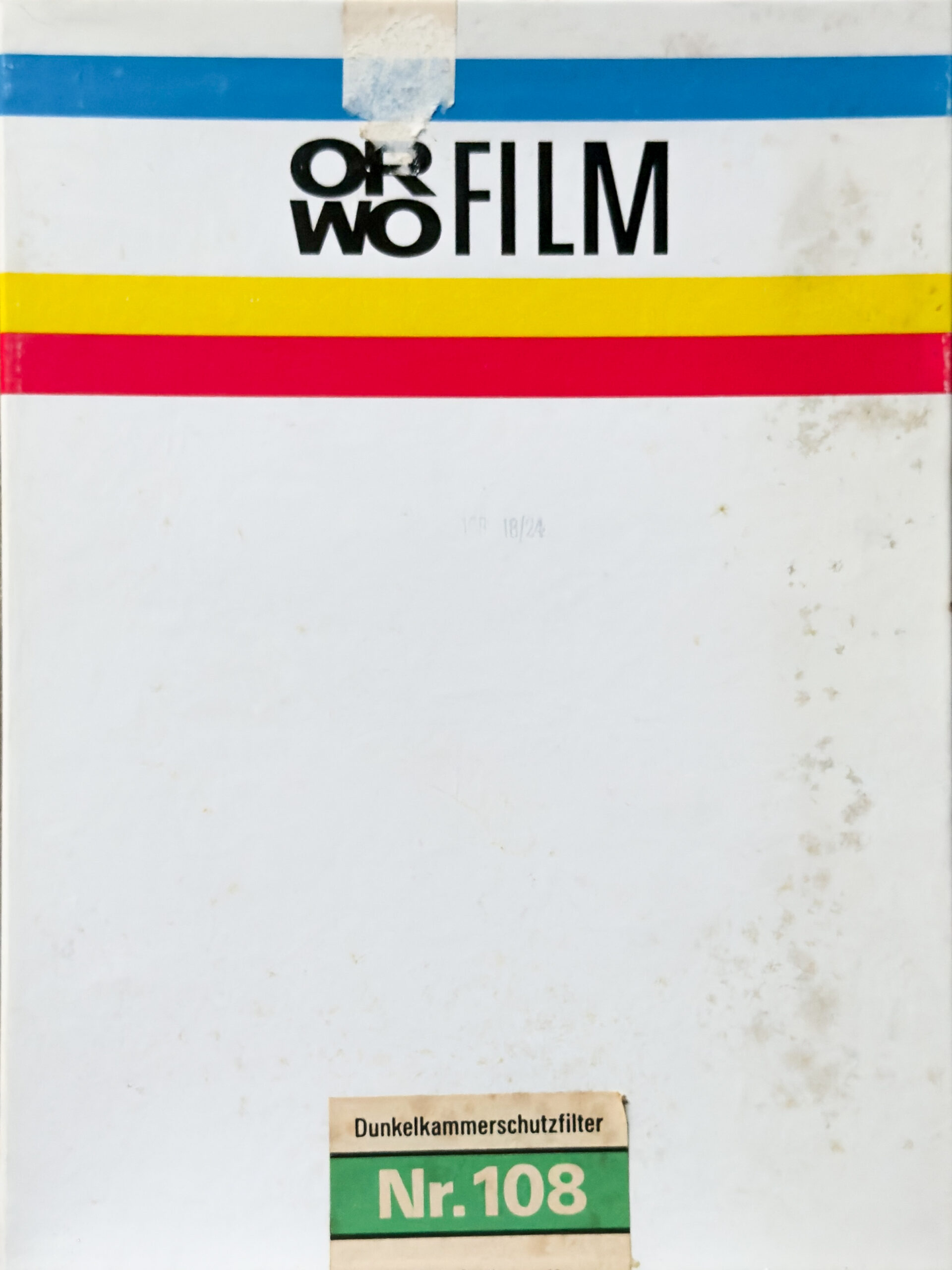
ORWO Nr.108 is a safelight red filter – the goat, one of the most popular option among professional and home labs accross the ex-Eastern bloc.
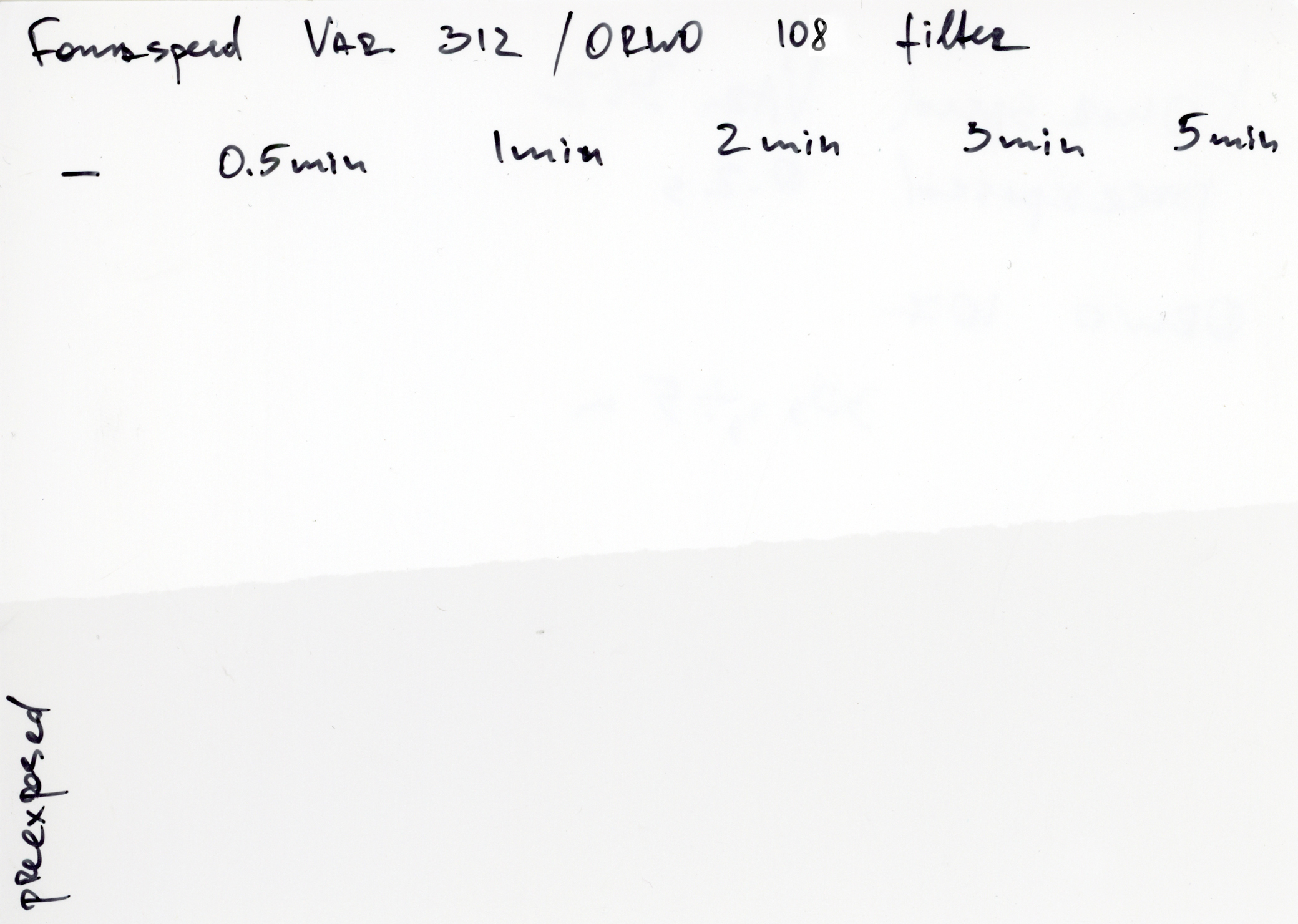
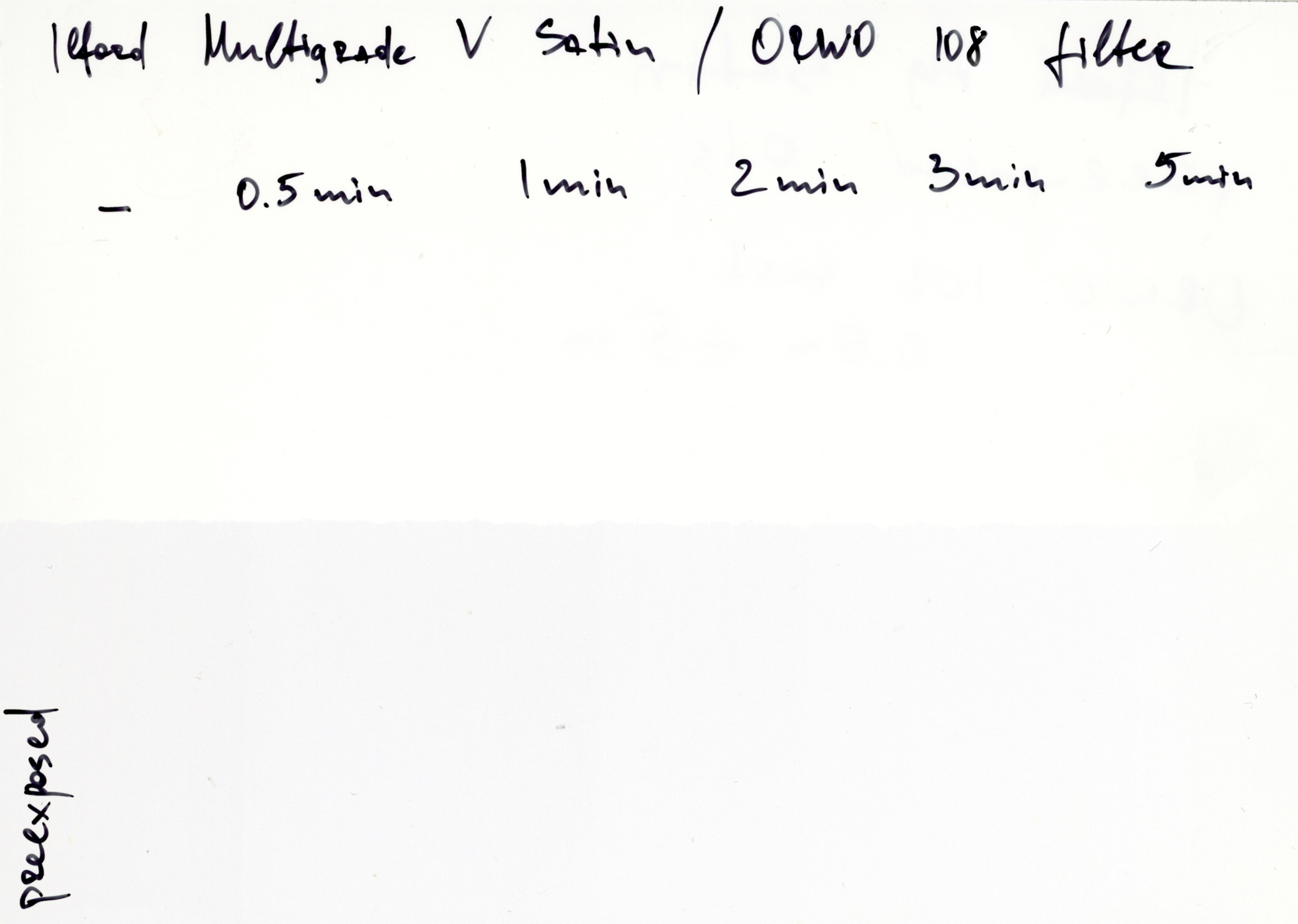
Despite its age Nr 108 showed zero change in Reflective Density on both Ilford and Foma, proving that a high-quality red filter remains a formidable tool for the modern printmakers.
The ORWO Safelight Filter 113D (also labeled as 113 D Gelbgrün matt dunkel) is a yellow-green matte glass filter produced in the German Democratic Republic (GDR) as Nr.108. According to its original specifications it is a dedicated filtter for orthochromatic materials.
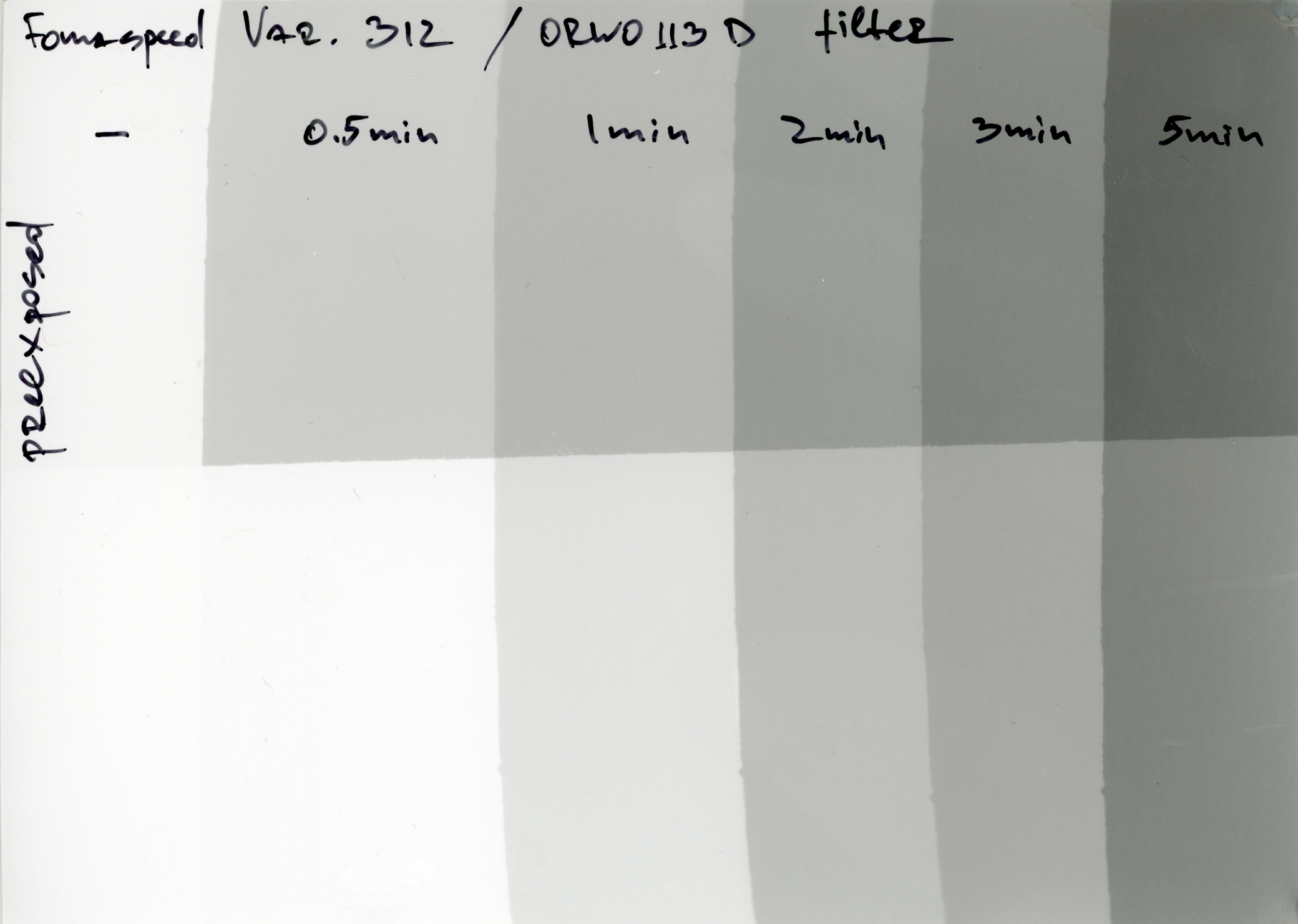
A total betrayal for VC paper users, the Fomaspeed Variant showed immediate fogging at just 30 seconds, proving this legacy filter cannot stand the spectral sensitivity of modern emulsions.
Interestingly Ilford Multigrade V held up very well to the same spectral exposure.
2. The “Party Lamp” (Retail LED Red Bulb 3W)
The retail LED red “party lamp” is perhaps the most dangerous trap for the modern printmaker. These bulbs are designed for atmosphere, not for the darkroom. While they trick the human eye into seeing a saturated “red,” their spectral output is often incredibly wide and messy. They leak high-energy wavelengths that are invisible to us but act as white light to a silver-gelatin emulsion.
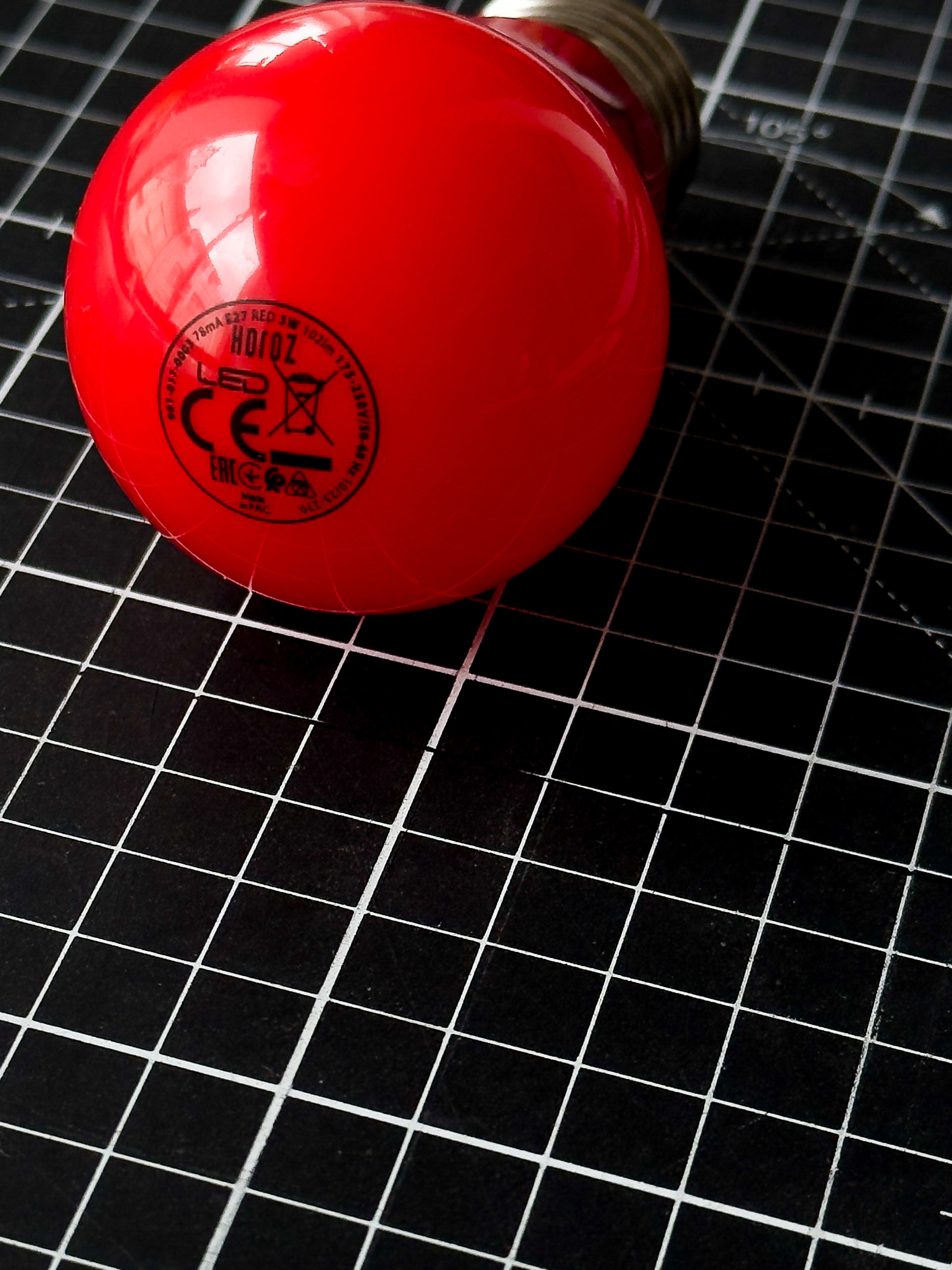
Using one of these as a darkroom safelight is The Ultimate Trap, effectively a sacrifice ritual for your highlights.
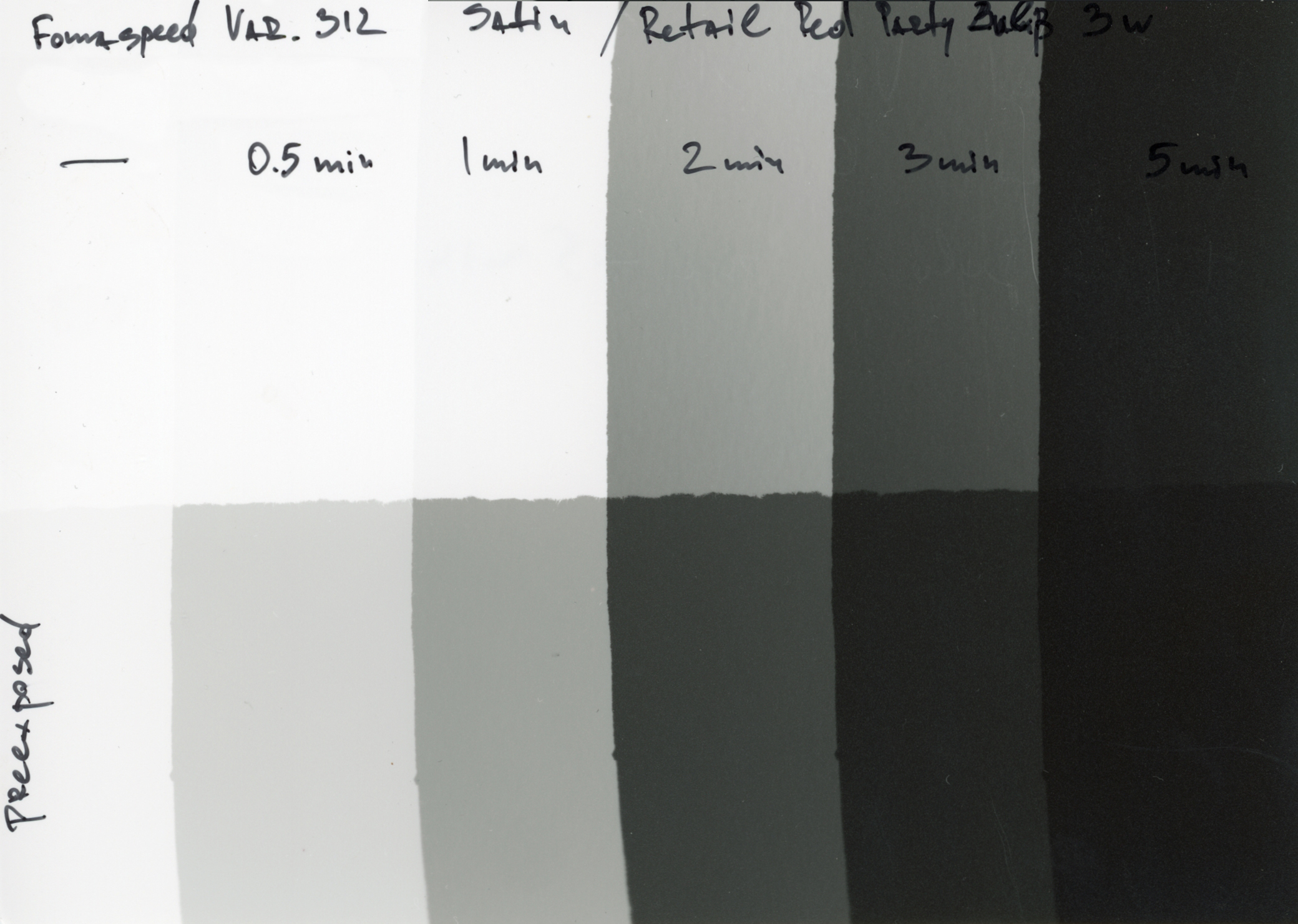
Fomaspeed 312 – catastrophic failure, the paper reacted instantly to the spectral leakage showing distinctive visible change in the RD.
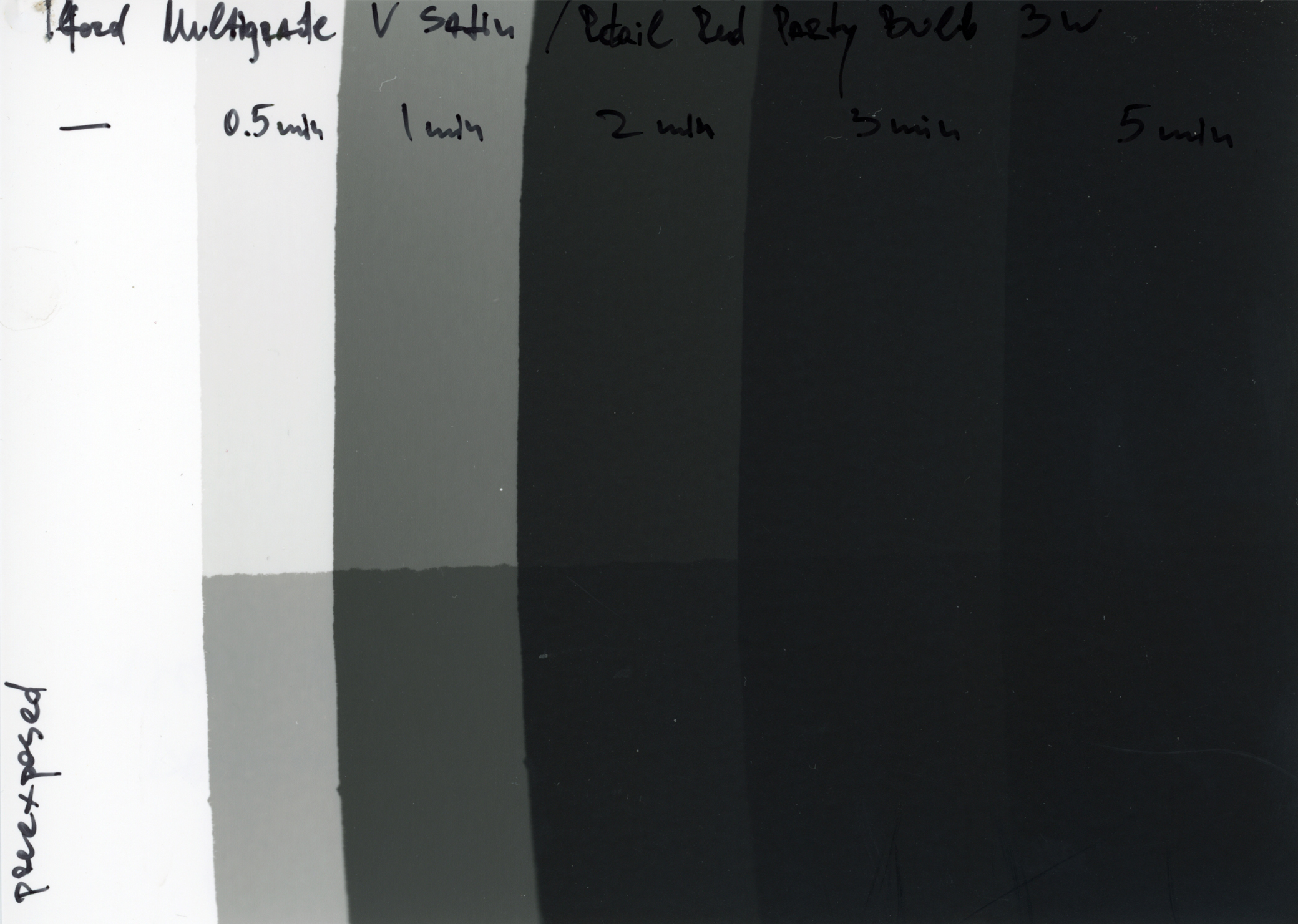
Ilford MG V – Rapid highlight death, visible changes appeared at the shortest exposure intervals, darkening toward black by the 5-minute mark.
3. The RADLAMP (660nm @ 0.452W)
The RadLamp was developed as our direct answer to the Safelight Paradox. We moved away from “filters” and instead utilized narrow-band LED technology. By centering the output at exactly 660nm—a wavelength far outside the sensitivity range of most black and white emulsions—we eliminated the need for guesswork. For this test, the lamp was operated in “Middle Power Mode” to provide a realistic, workable amount of ambient light.
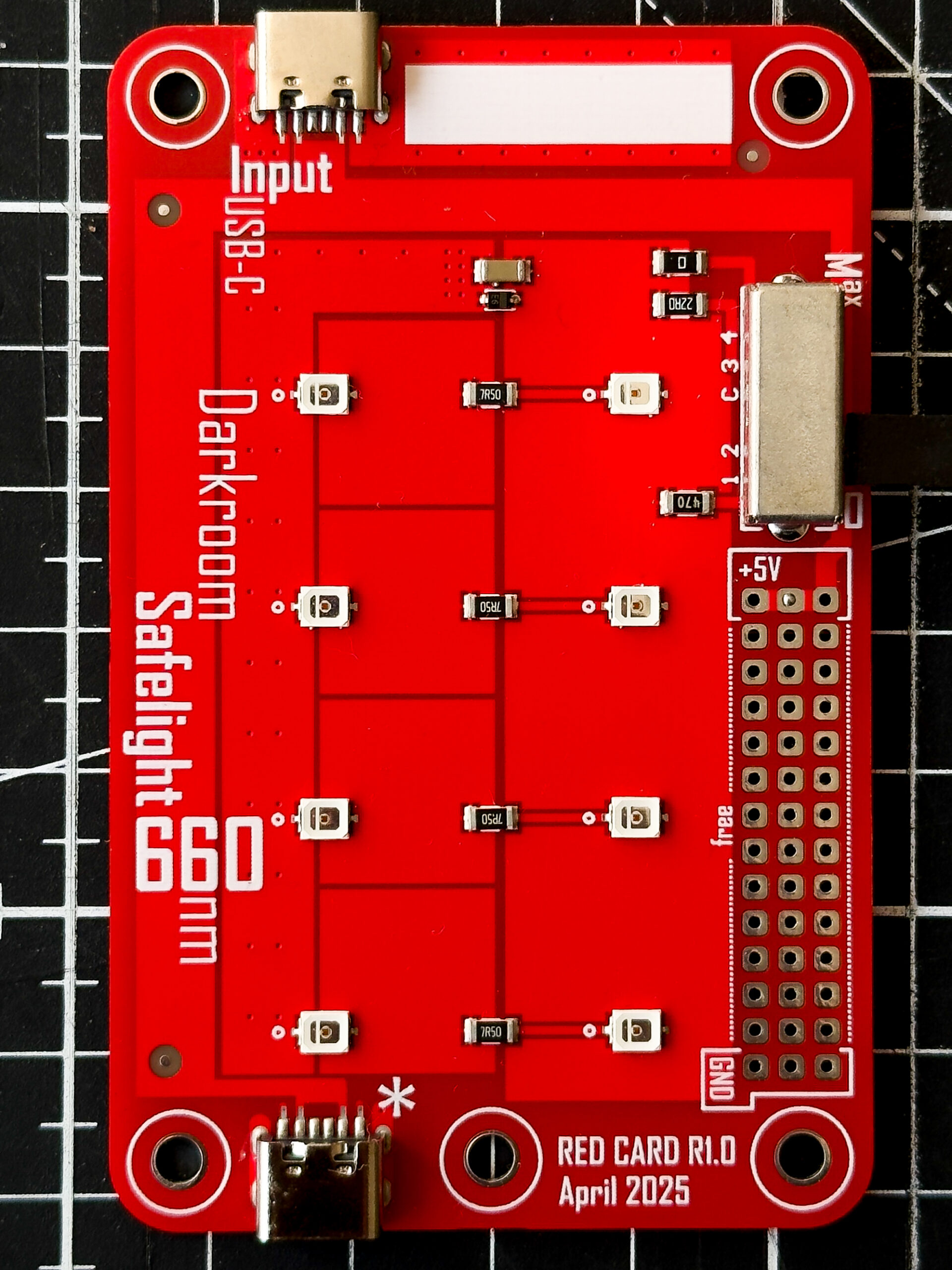
Prescision-engineered at 660nm. No coin-flipping, just physics.
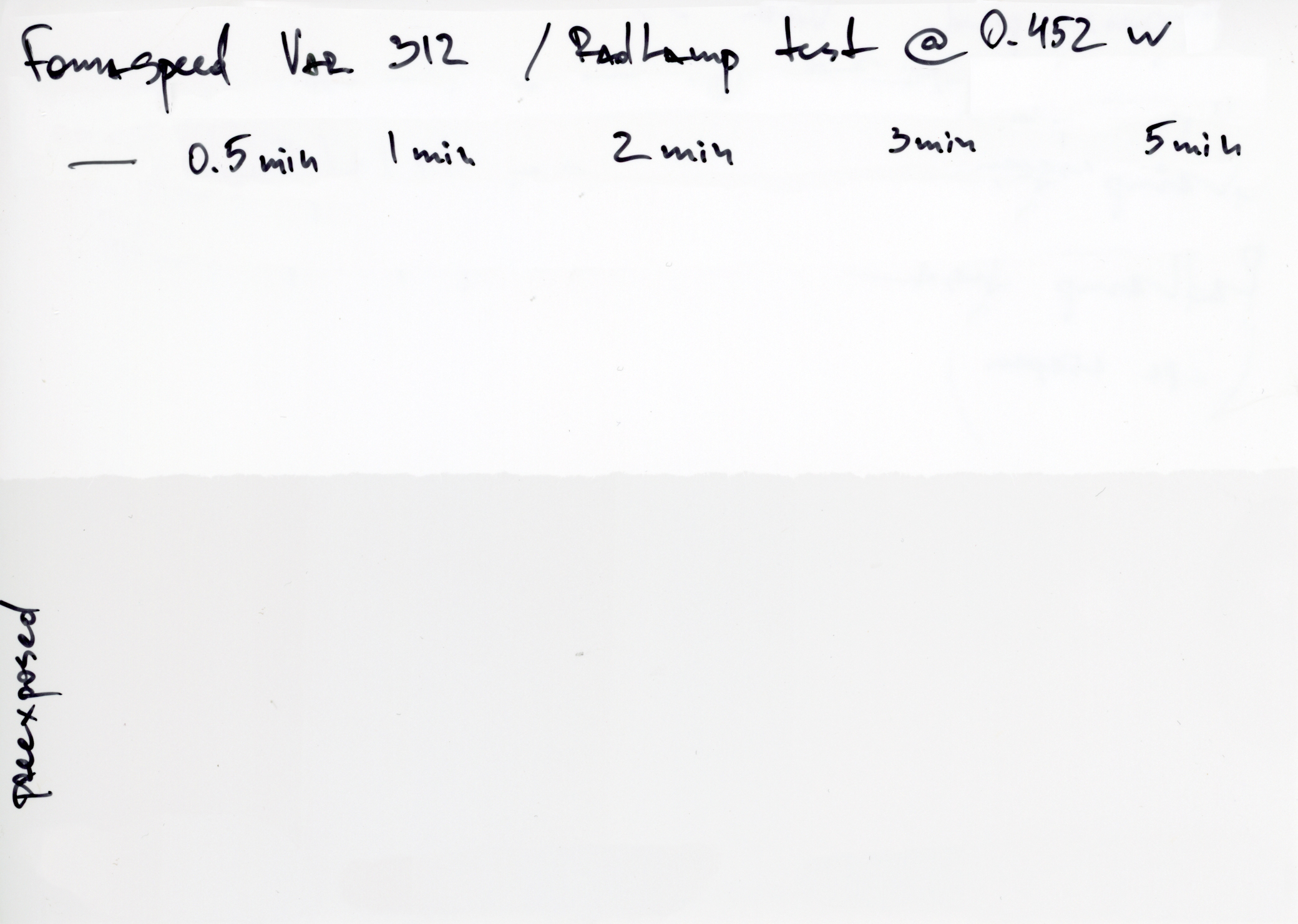
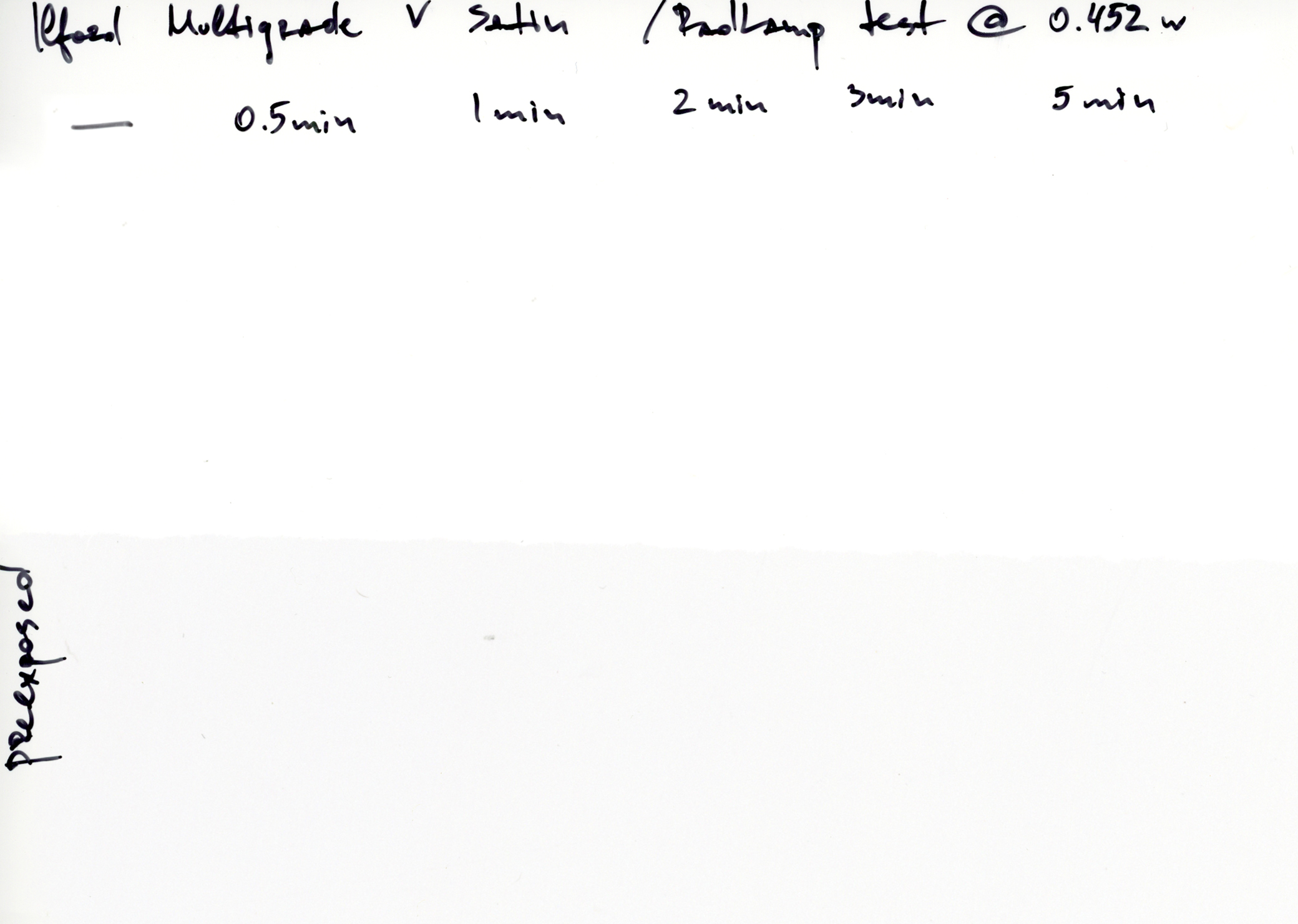
Science-backed security, after 5 minutes of direct stress at 0.452W, both papers showed Absolute Zero change in density.
The Verdict: Zone 9 Fogging
Our logic is simple: we want to see how the brightest grays of your print blend into muddy grays due to safelight fogging. You can call it “Zone 9 fogging” if you like, but the damage doesn’t stop there. This extra exposure attacks the entire tonal scale. It chokes the shadow detail and muddies the whites, leading to a total loss of contrast and “snap”.
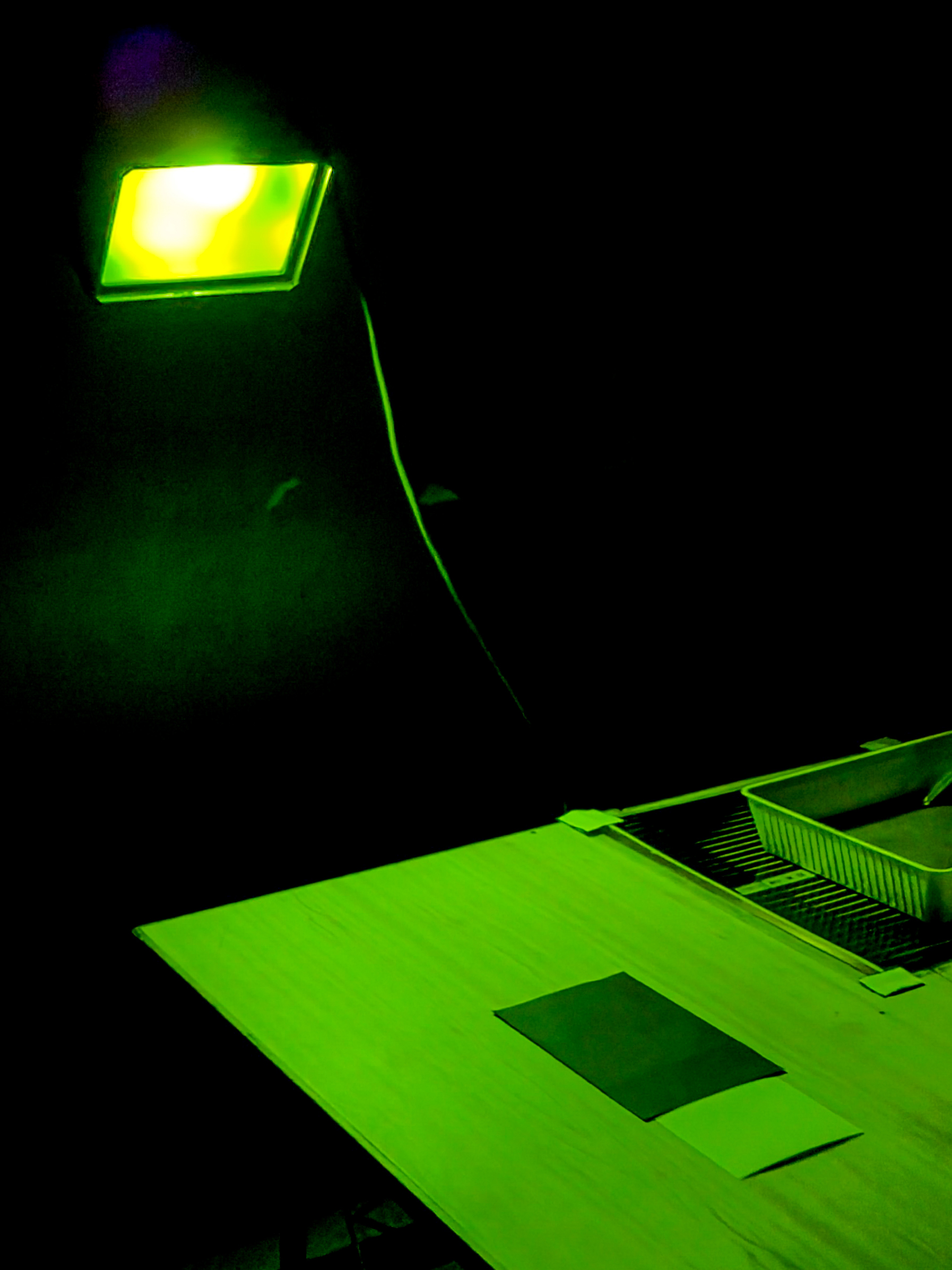
Photosensitive papers has evolved,therefore some safelight options can’t stand modern safety standards.
The Takeaway: Don’t Trust Your Eyes
The most dangerous thing in a darkroom is a light that looks safe but isn’t. Spectral sensitivity takes place within very tight wavelengths. Our eyes are broad sensors, but photographic chemistry is a precision instrument. Just because a room looks “red” to you doesn’t mean your paper is blind to the light.
As paper technology evolves, our safety standards must follow. We highly recommend every printmaker conduct a threshold-based stress test. But if you want to skip the paranoia and get straight to work, the RadLamp is our solution for you. Contact us if interested.
Safety Approved by:
-
Design & Production: Steffan Ivanov @steffan_ivanov_
-
Spectral Analysis: Nikola Dyulgyarov @attrxia
-
Stress Testing: Ivelin Penchev – Ivicha @ivich_
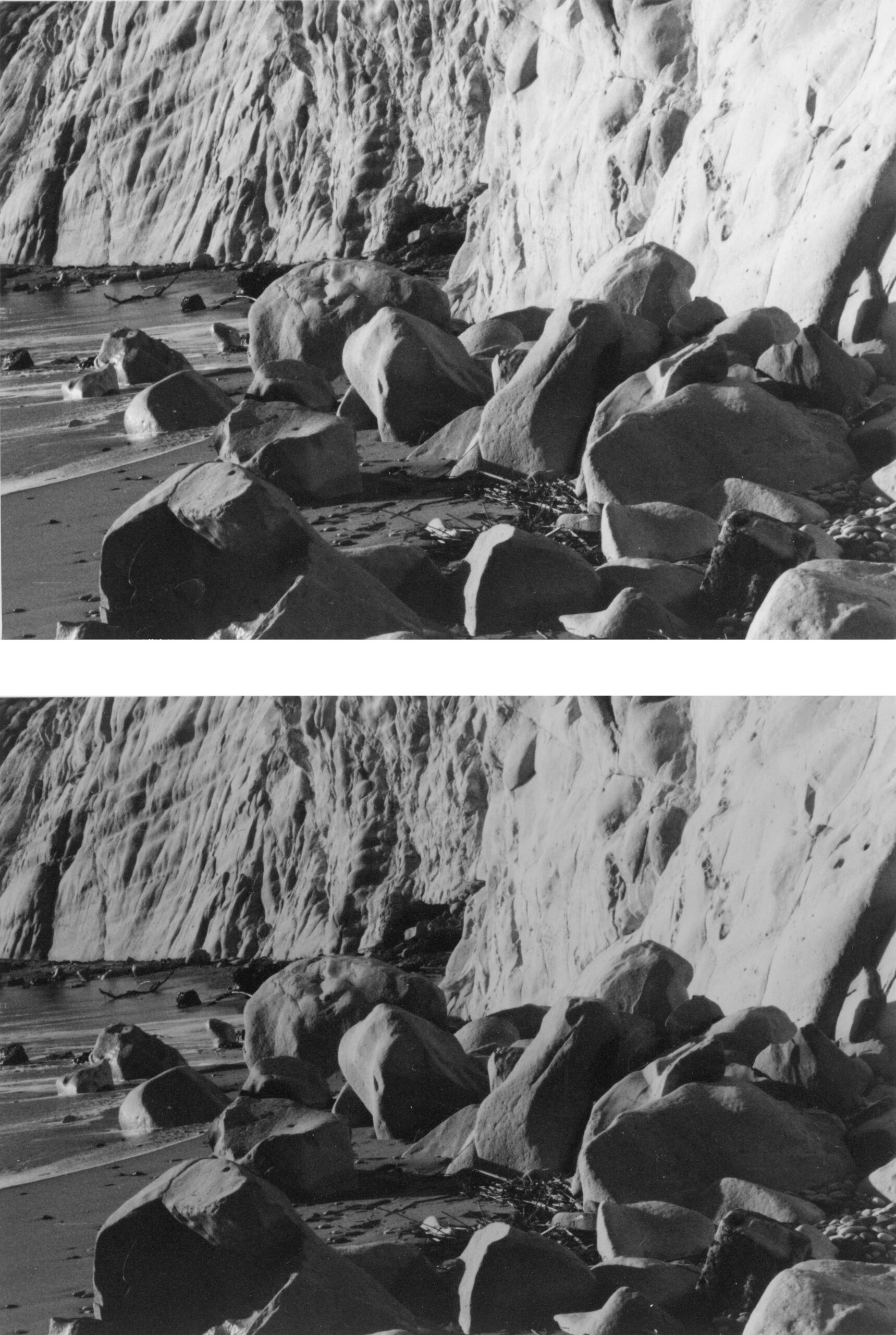
Silver-gelatine prints exposed and processed identically printed on Fomaspeed Variant 312. Upper using RadLamp, lower using ORWO Nr. 113D.
Shot by Ivicha
Leave A Comment